PACKAGE DISCOVERY
Helping users discover the right lab package with confidence.
8 min read
The brief
Choosing a lab package on Tata 1mg wasn't as simple as searching for a test. Users had to browse through dozens of similarly named packages without understanding which one actually suited their health goals. The result was a fragmented decision-making journey that often stretched across multiple sessions. This project focused on redesigning the package discovery experience by introducing personalization, guided decision-making, and clearer package recommendations-making it easier for users to find the right package with confidence.
39 → 11
Minutes to choose a package
3–4 → 1
Sessions before booking
63%
Users who couldn't find a relevant package
Situation
Finding the right lab package had become increasingly difficult.
Users visiting Tata 1mg were presented with hundreds of packages that looked almost identical. There was very little guidance to explain who a package was meant for, what differentiated it from others, or why someone should choose one over another.
Most users ended up comparing multiple packages manually, switching between search results, landing pages, and recommendation widgets before making a decision.
For many, that decision never happened. Research showed that users spent nearly 39 minutes across multiple sessions, while 63% still failed to identify a relevant package.

Task
How might we help users confidently find the most relevant package based on their health goals?
Instead of asking people to compare dozens of similar options, the experience needed to guide them towards a decision.
- Reduce cognitive load
- Personalize recommendations
- Improve discoverability
- Increase confidence before booking
- Reduce time to conversion


Action
From endless browsing to guided discovery.
Research surfaced four friction points: decision fatigue (37–39 minutes per selection), multiple sessions (3–4 visits before booking), poor discoverability (63% never found a suitable package) and no personalization-everyone saw the same recommendations regardless of intent.
A heuristic audit of the existing experience showed promotional banners dominating the first screen, packages without context, limited filters, a search that wasn't optimized for packages, no comparison and no personalization. Hick's Law, Jakob's Law, Tesler's Law and the Law of Similarity framed the rework.
Five principles guided every decision: reduce cognitive load, personalize discovery, improve trust, enable comparison and make search smarter.
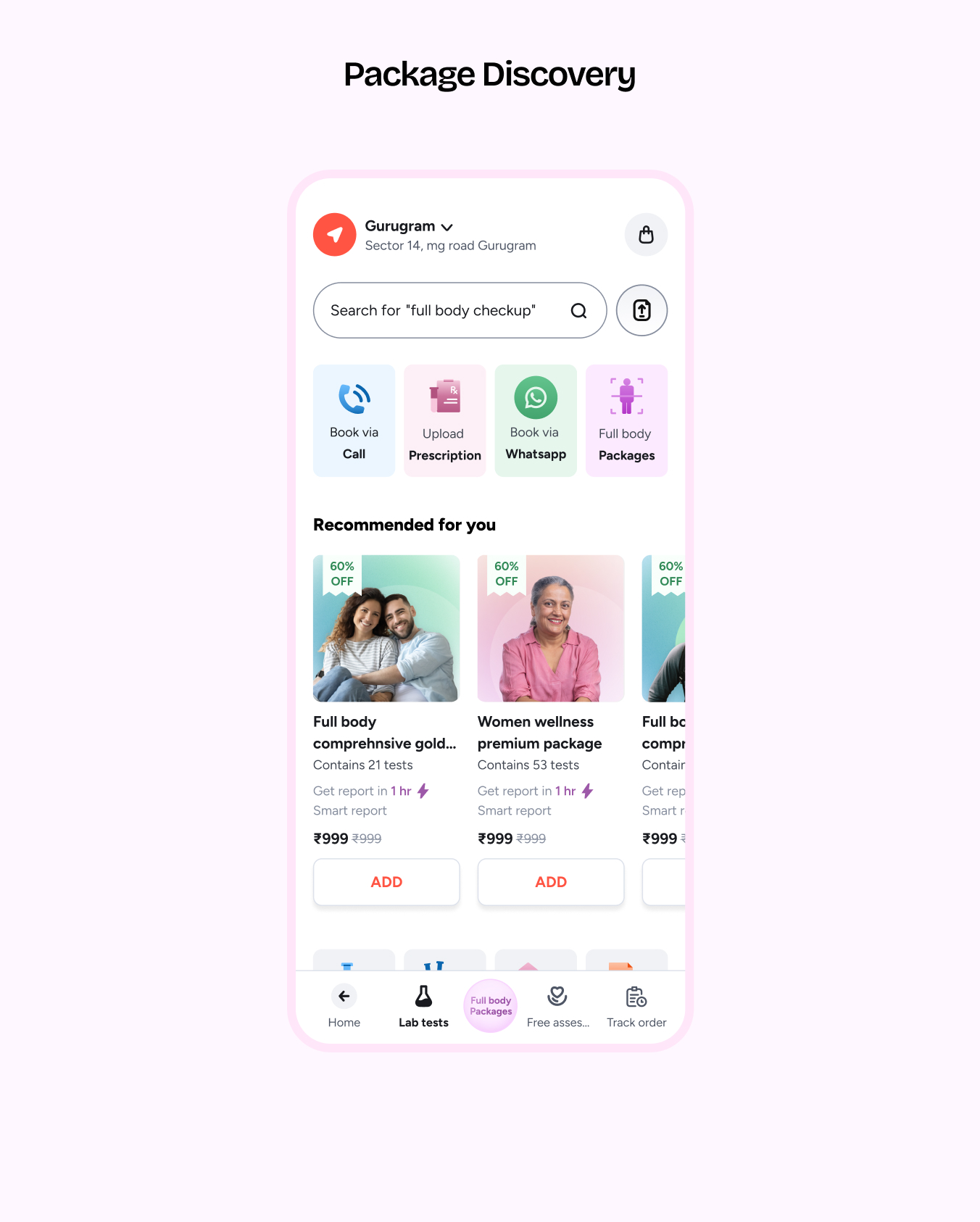
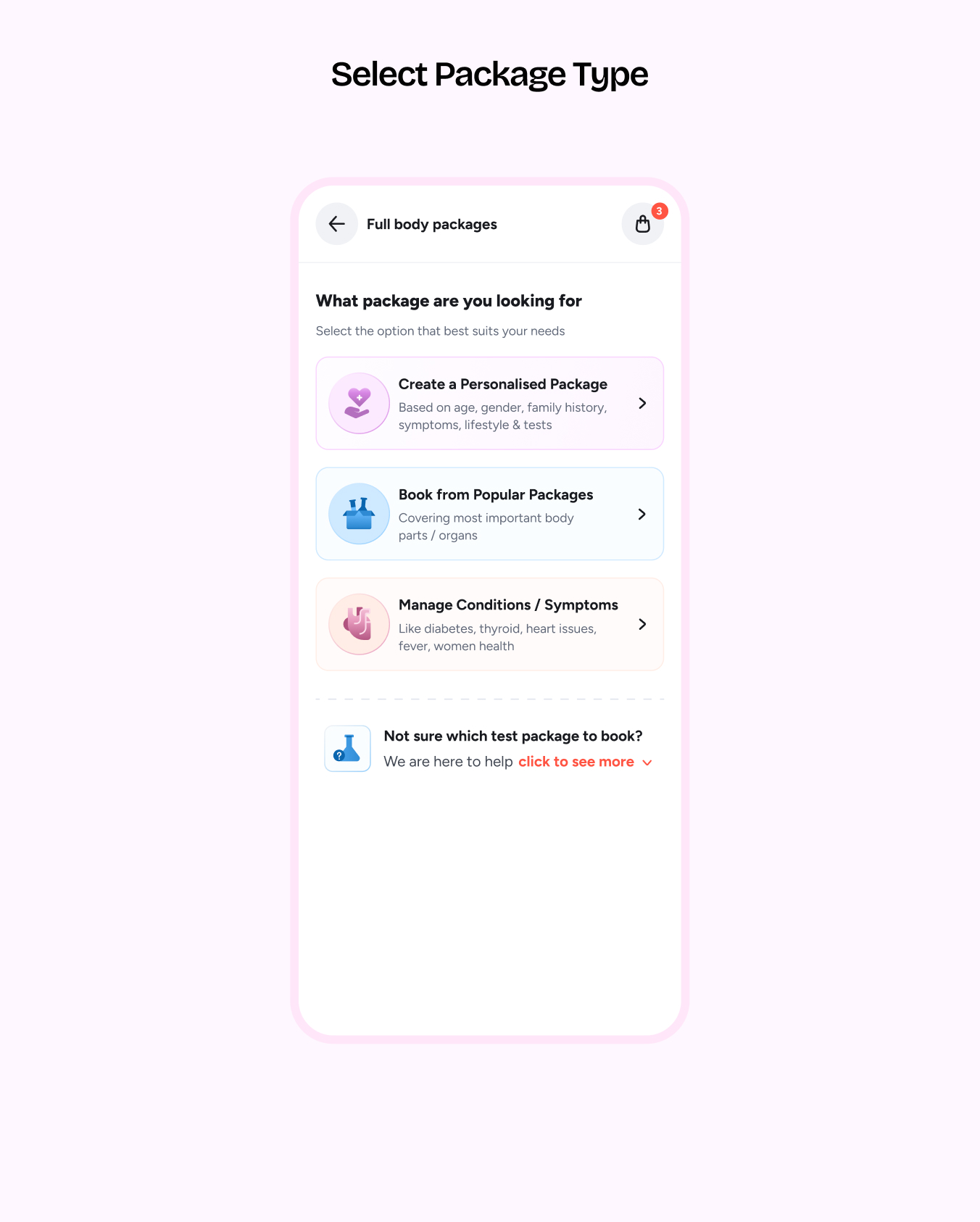
Guided Package Discovery - instead of immediately showing hundreds of packages, users first choose how they'd like to discover one: personalized, popular, condition-based or assisted.
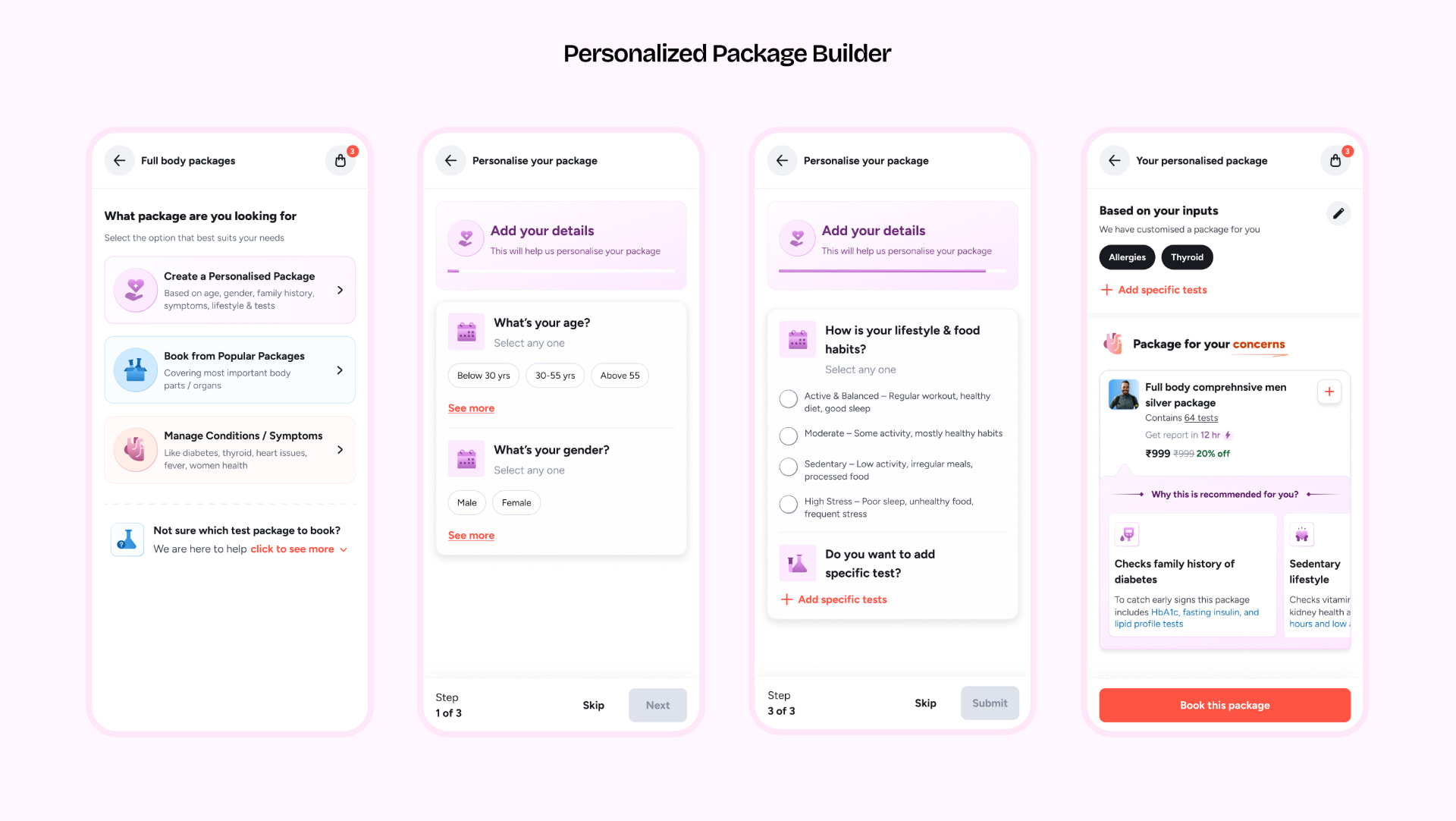
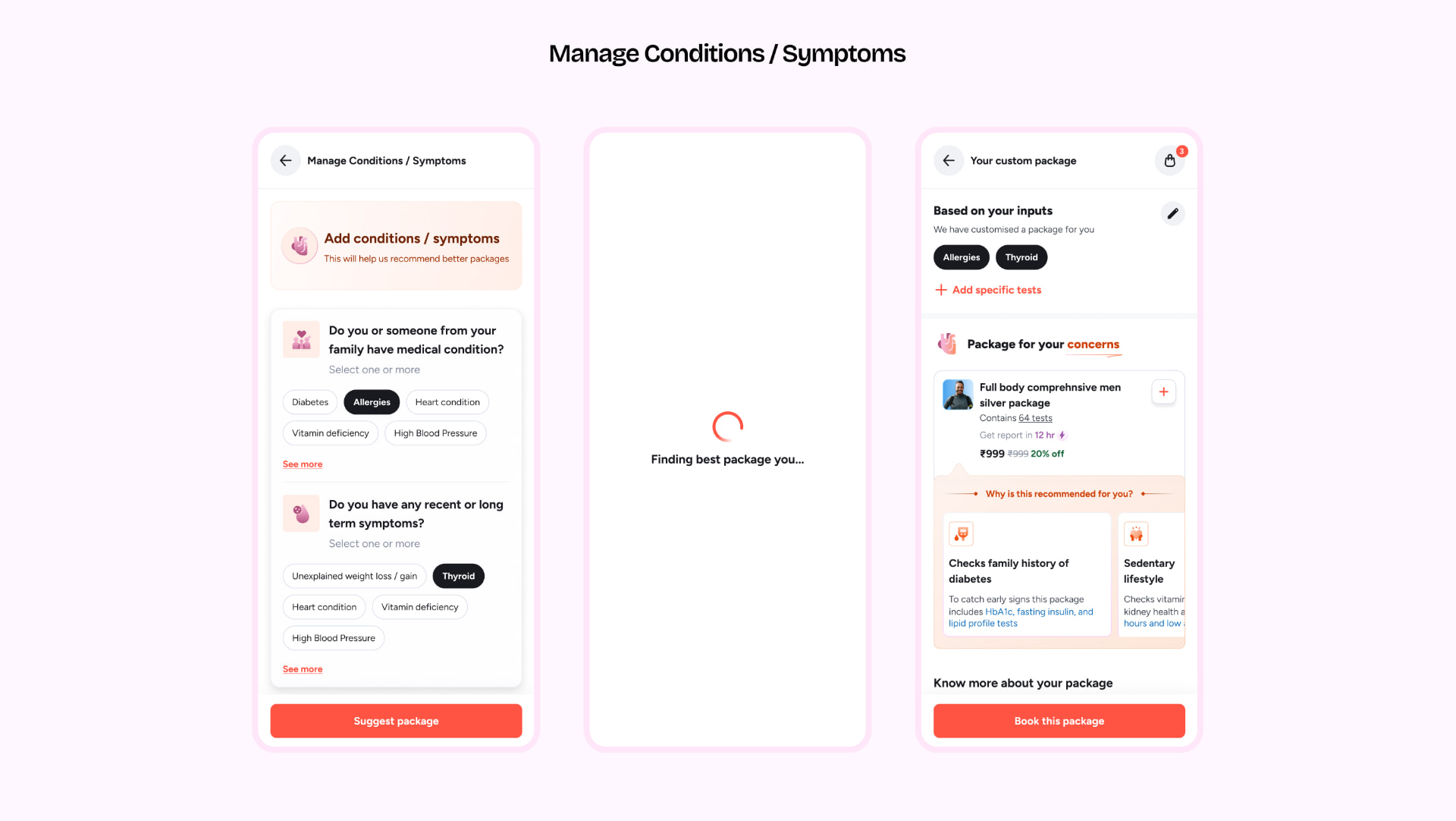
Personalized Package Builder - a few simple questions on age, gender, lifestyle, existing conditions and health goals generate the most relevant package instead of asking users to search manually.
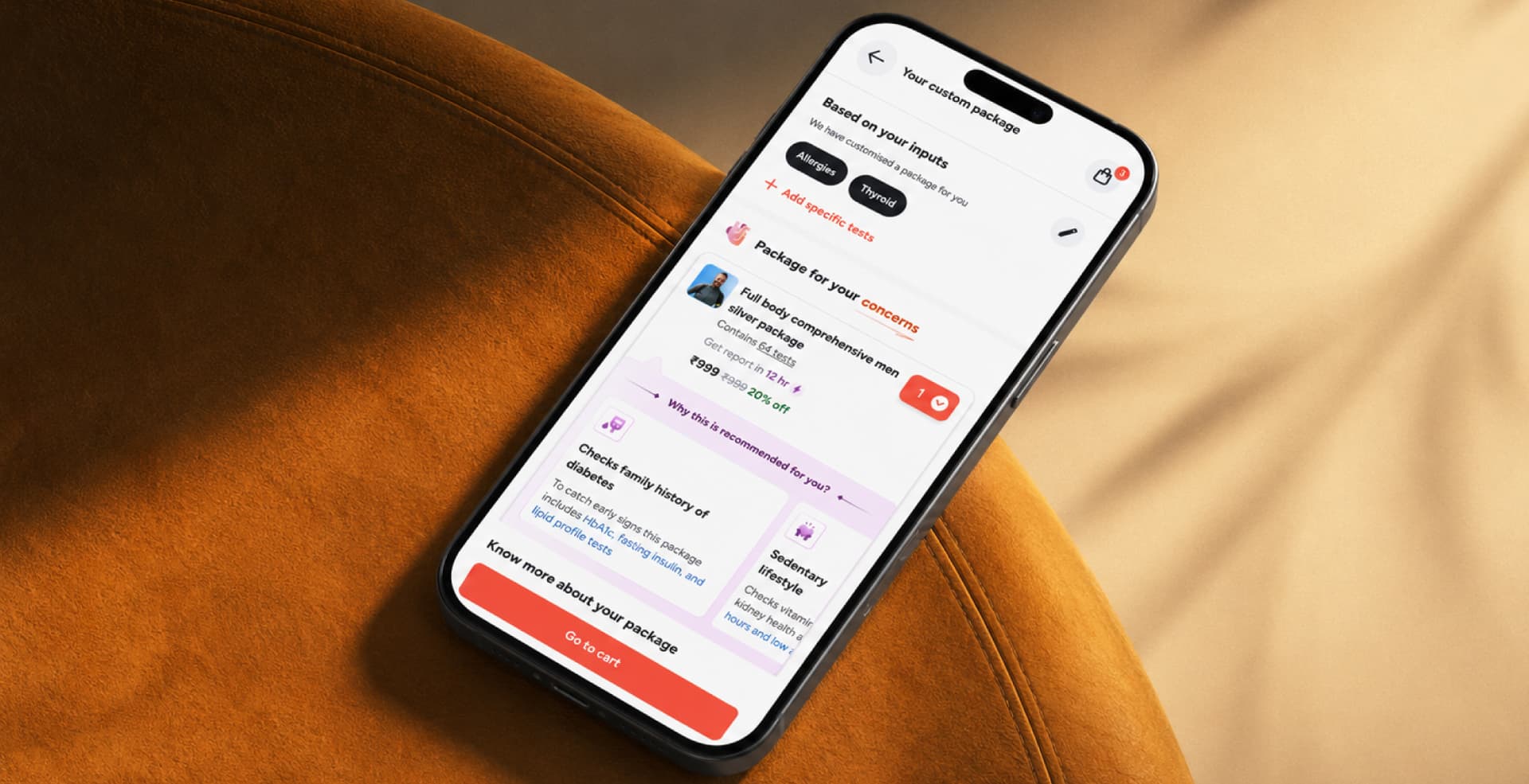
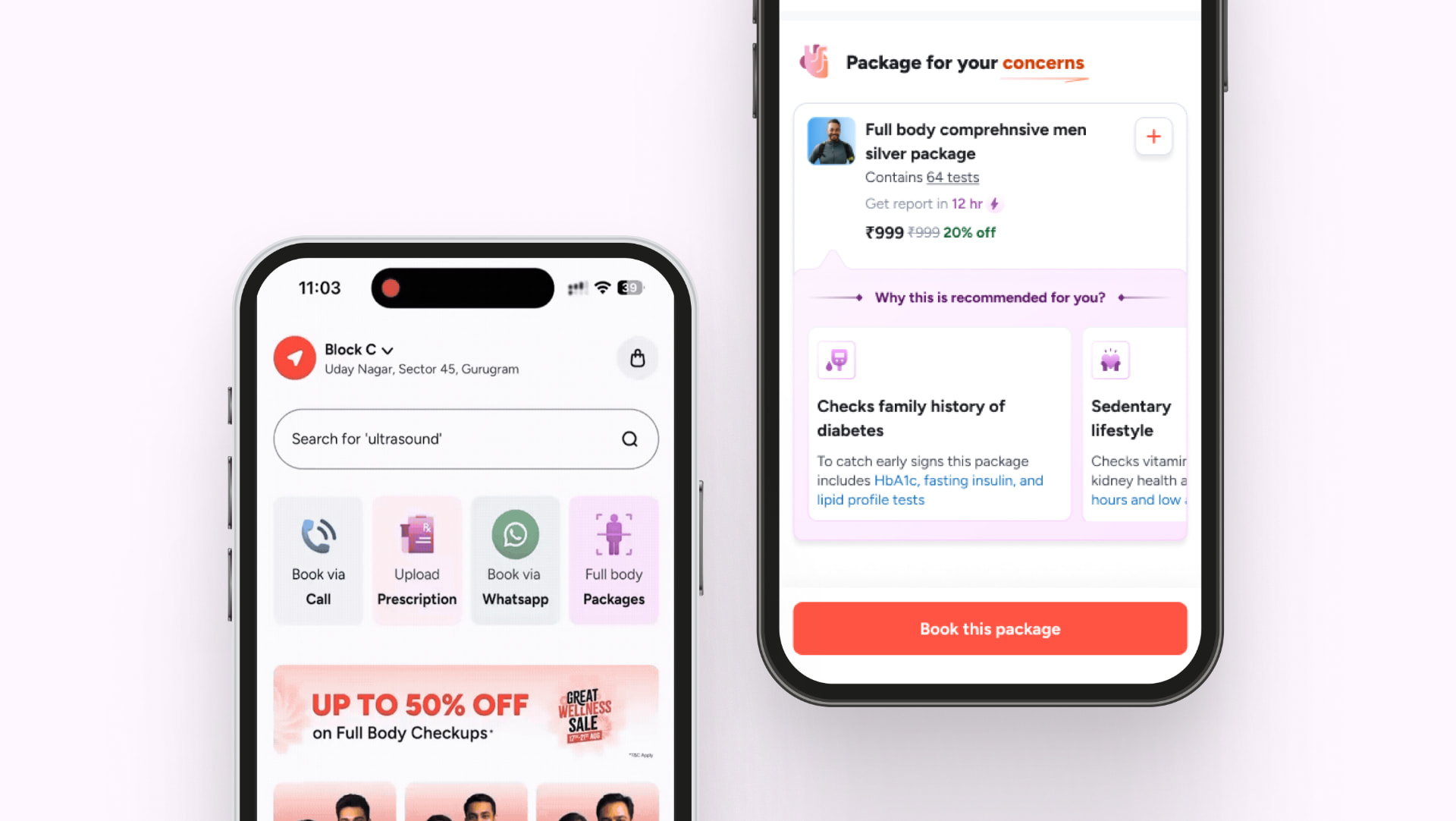
Explainable Recommendations - every card answers one question: why was this recommended? Relevant symptoms, family history, lifestyle match and included health markers build trust before booking.
Smart Package Filters - health goals, age, gender, budget, preventive or chronic, report time and home collection replace generic sorting.
Package Comparison - included tests, health categories, price difference, savings, report turnaround and recommended use case, side by side.
Condition-based Recommendations - selecting diabetes, thyroid, allergies, vitamin deficiency or heart health surfaces suitable packages, with the option to add individual tests.
Result
Browsing became a decision.
The redesigned experience transformed package discovery from an overwhelming browsing exercise into a guided decision-making journey.
- Discovery time reduced from 39 mins to 11 mins
- Reduced decision fatigue
- Higher confidence before booking
- Personalized recommendations based on user intent
- Easier package comparison and a faster path to checkout
“People don't want more options. They want the right one.
Healthcare decisions are rarely simple.
People aren't looking for another list of packages-they're looking for reassurance that they're choosing the right one.
By shifting the experience from browsing to guided discovery, we helped users spend less time comparing options and more time taking action towards their health.