KETTO
Building a personalized donor journey that turns one-time donors into lifelong contributors.
8 min read
The brief
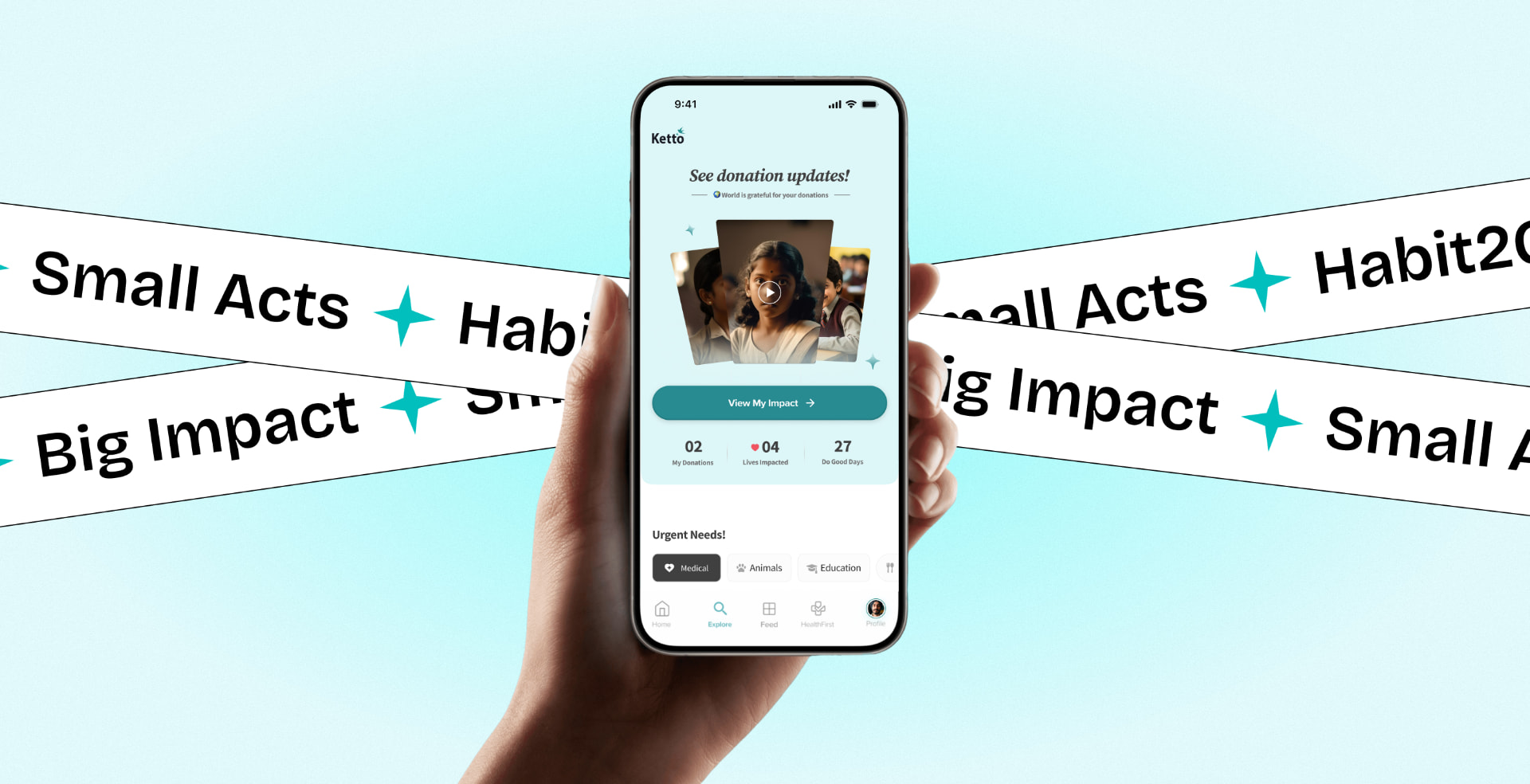
Ketto had already optimised the donation flow, but the relationship ended the moment a donation completed. Every returning donor landed on the same homepage regardless of history, interest or intent - no impact updates, no recommendations, no goals, no tax reminders, no reason to come back. The objective was to transform Ketto from a transactional donation platform into a long-term giving ecosystem.
+8.1%
Repeat donations, month 1
+3.5%
Sustained recurring donations
7
Post-donation journeys designed
Situation
Millions of donors, and no relationship after the donation.
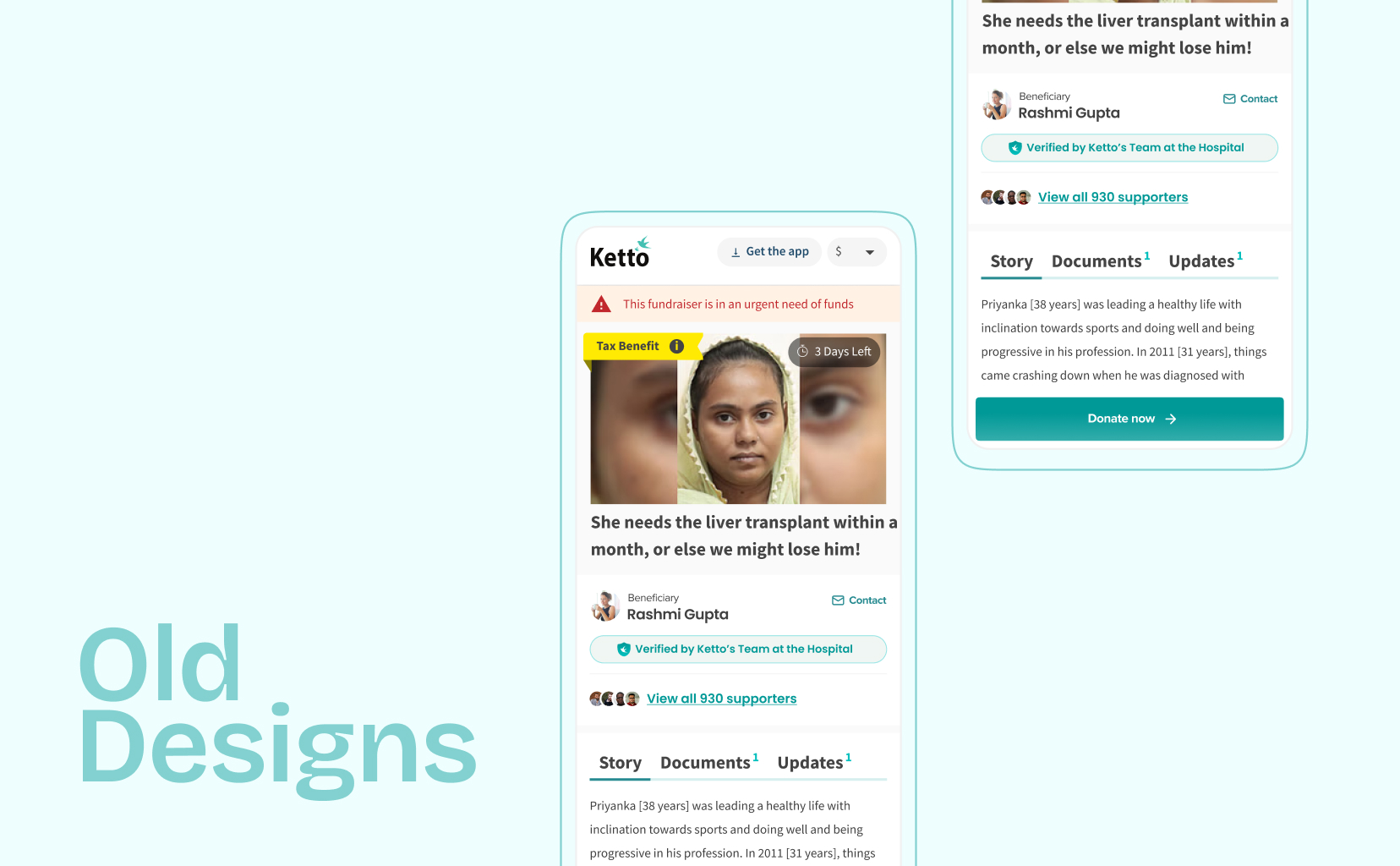
Over the years Ketto had acquired millions of donors, but post-donation engagement remained almost non-existent. The platform treated every returning user exactly the same.
There was no donation impact update, no personalized campaign, no donor profile, no stated preferences, no tax benefit collection, no visible donation history, no milestones and no habit-building mechanism.
Without any understanding of donor intent, marketing leaned on generic campaigns and tele-calling to drive repeat donations. Many users still believed in the causes, but grew frustrated with irrelevant communication and quietly disengaged.
Task
Design a post-donation ecosystem, not a better checkout.
The brief was to build everything that happens after a donation - the layer that turns a single contribution into an ongoing relationship between a donor and the causes they care about.
- Increase repeat donations
- Personalize every returning experience
- Capture meaningful donor preferences
- Encourage recurring donations
- Reduce dependency on outbound tele-calling
- Strengthen the emotional connection to causes

Action
Seven moves that turned a transaction into a journey.
01 Understanding donor behaviour - we mapped the lifecycle of every donor after their first contribution. Some wanted updates, some wanted tax benefits, some wanted recurring giving, some simply wanted to know their contribution mattered. Instead of one experience, we designed journeys around these motivations.
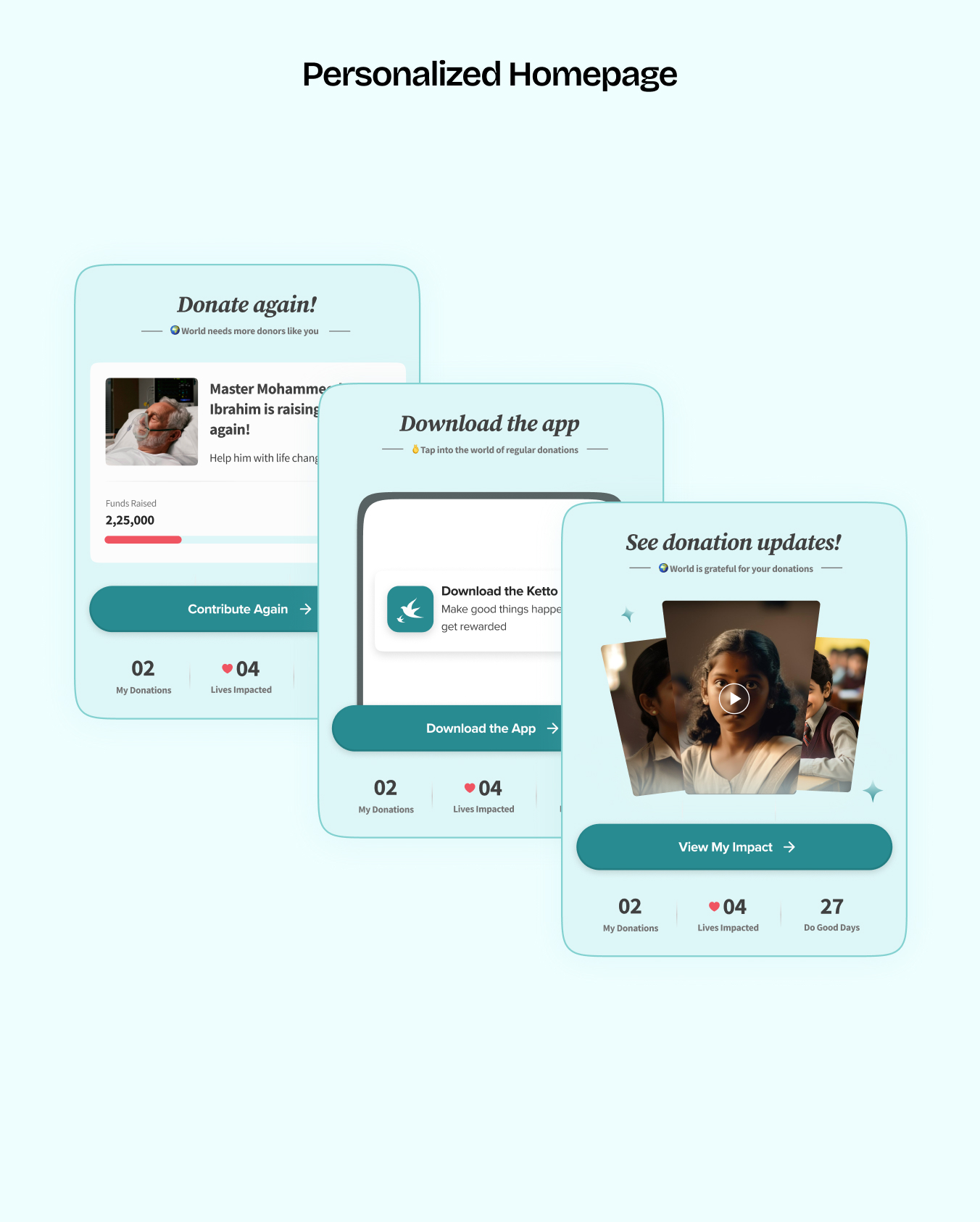
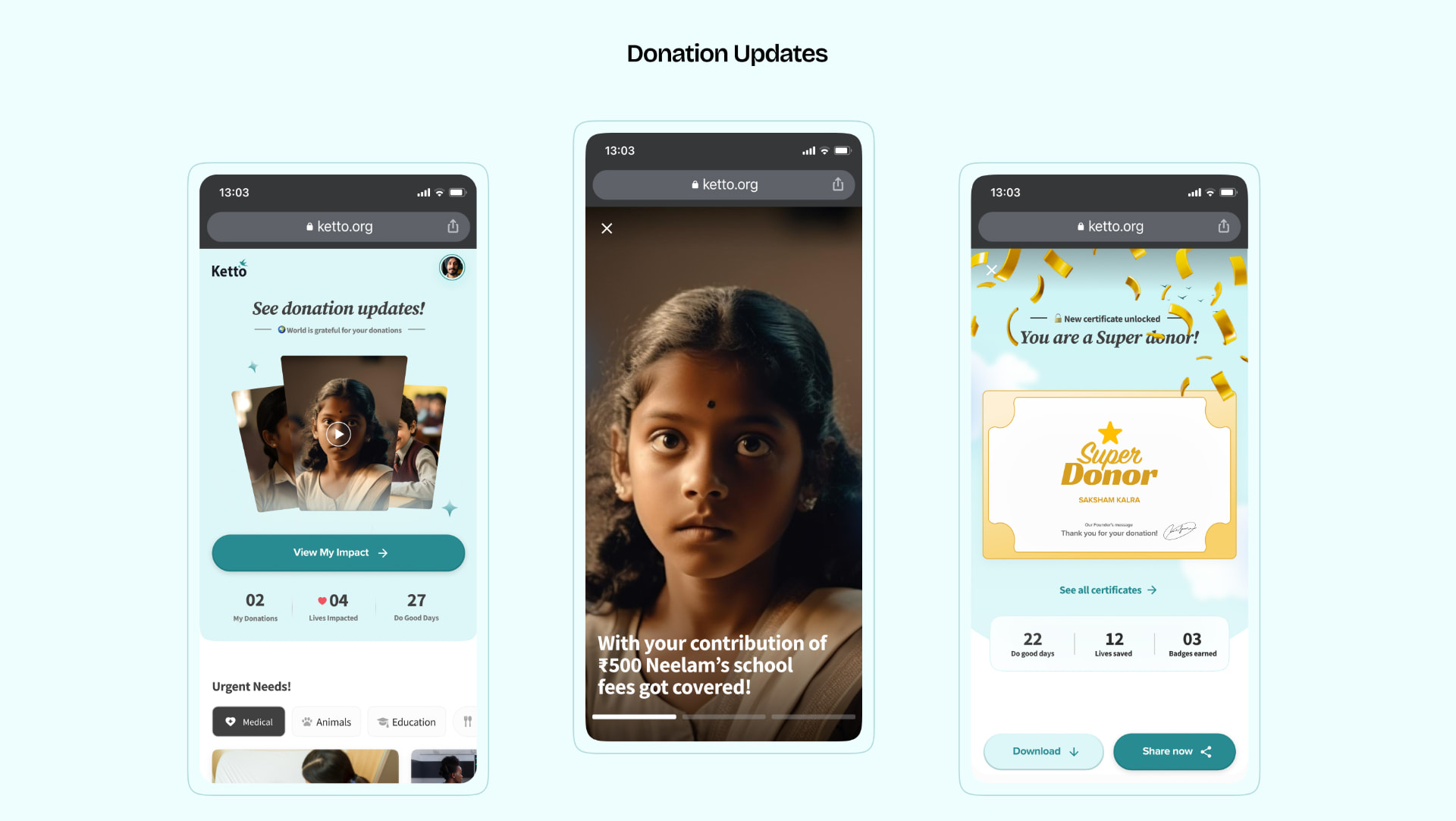
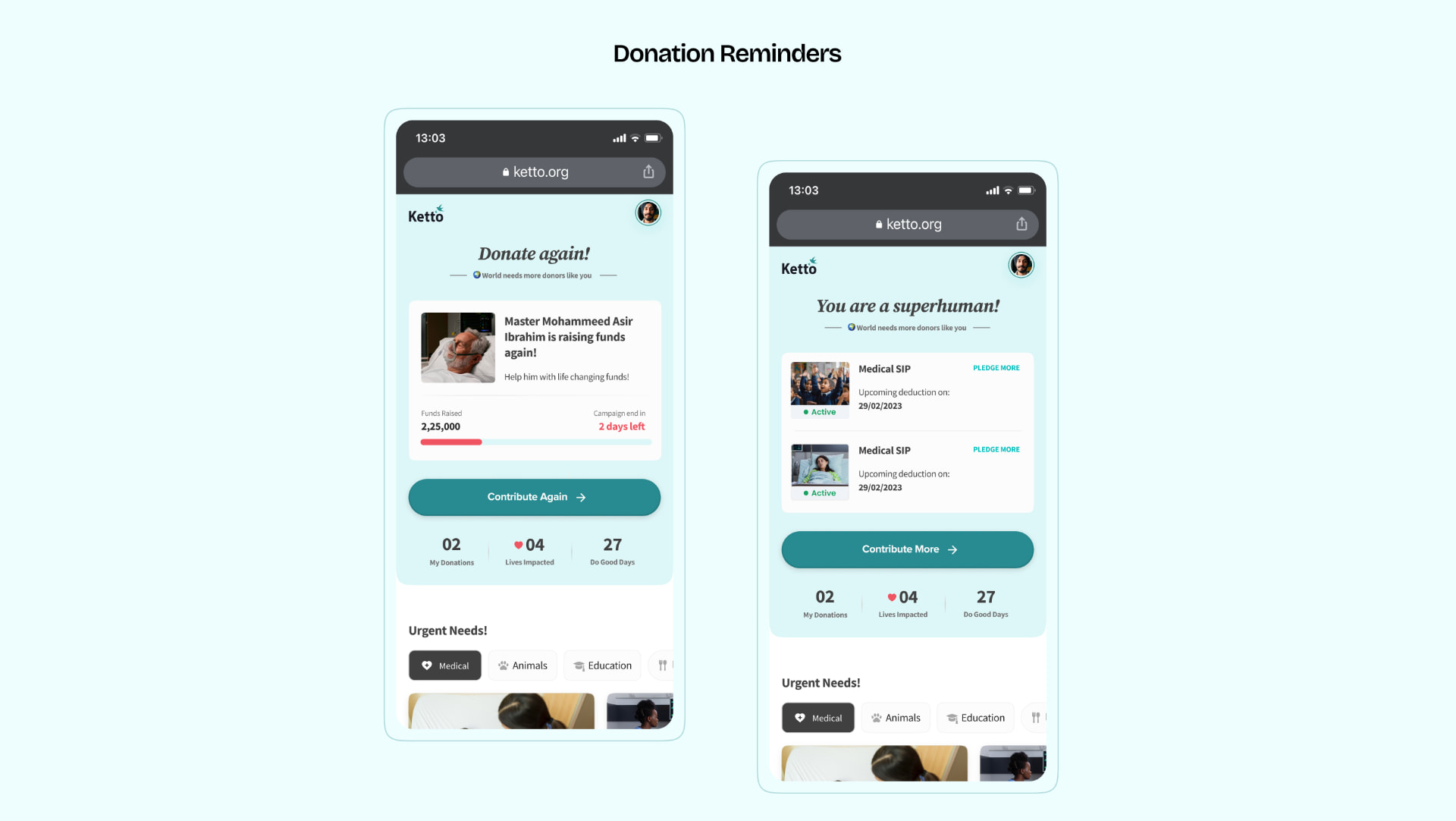
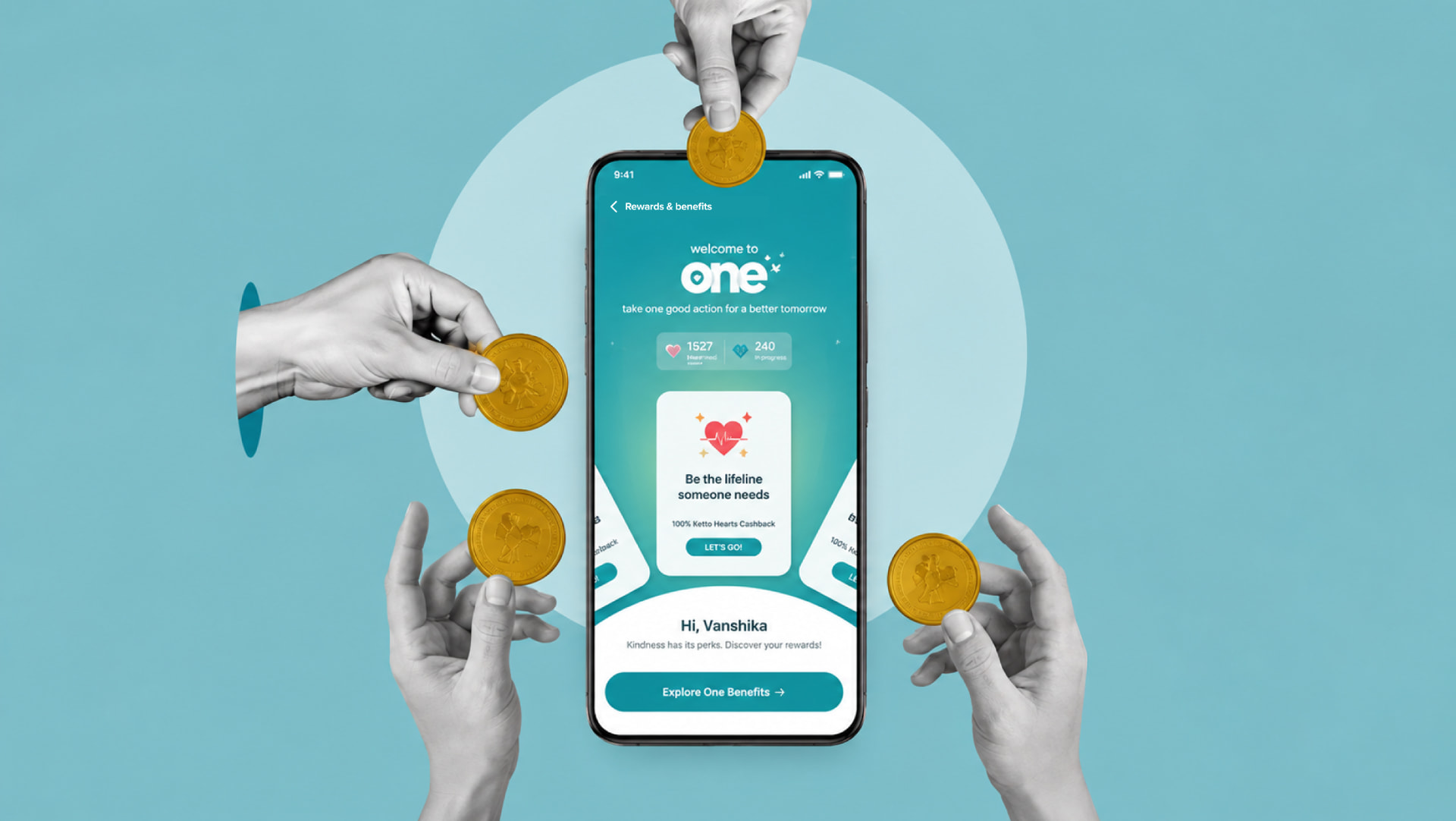
02 Personalizing the homepage - the homepage became dynamic based on user state, surfacing campaign updates, donation impact, personalized recommendations, causes to continue supporting, active monthly donations, goal progress and milestones. Every visit now had a reason.
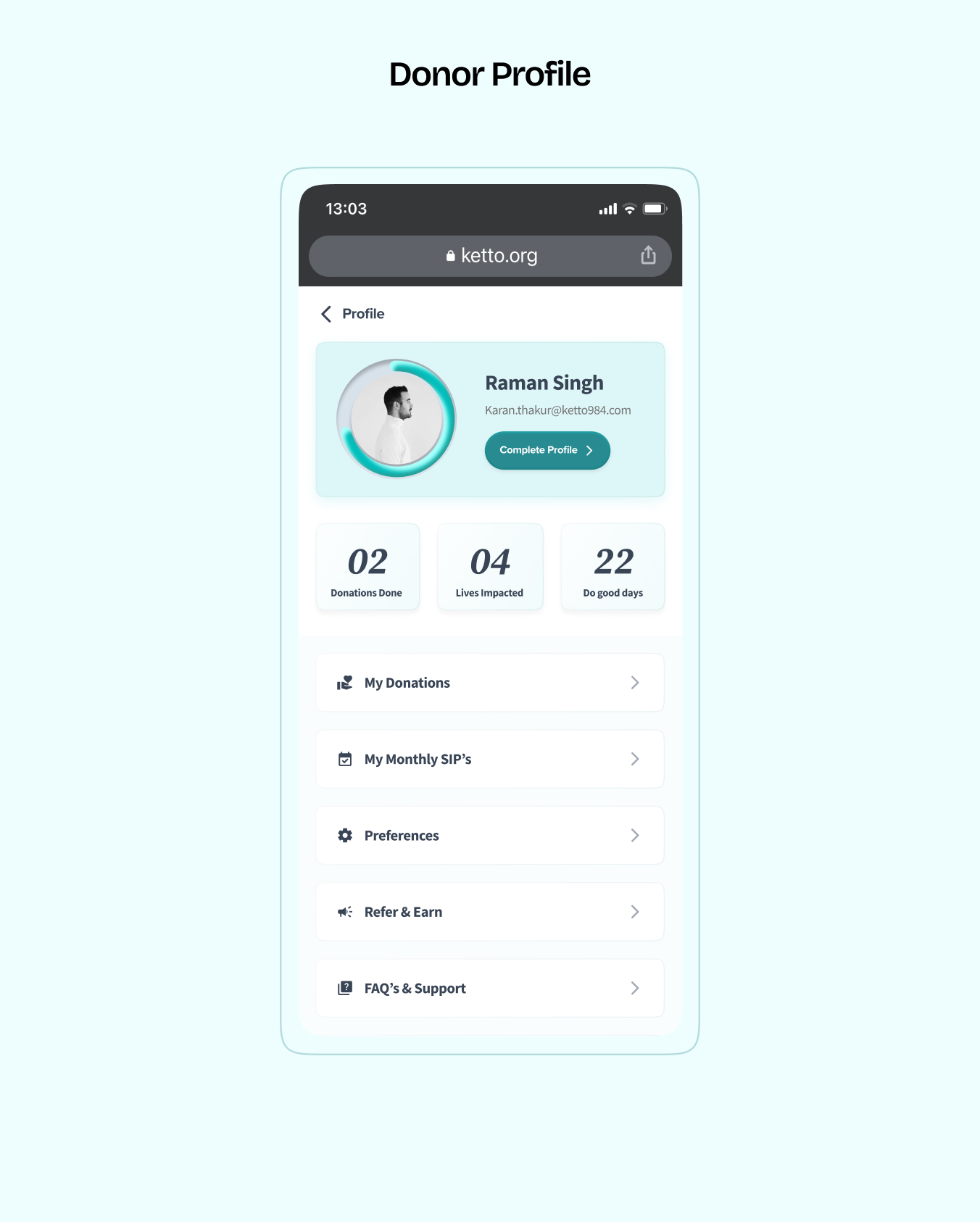
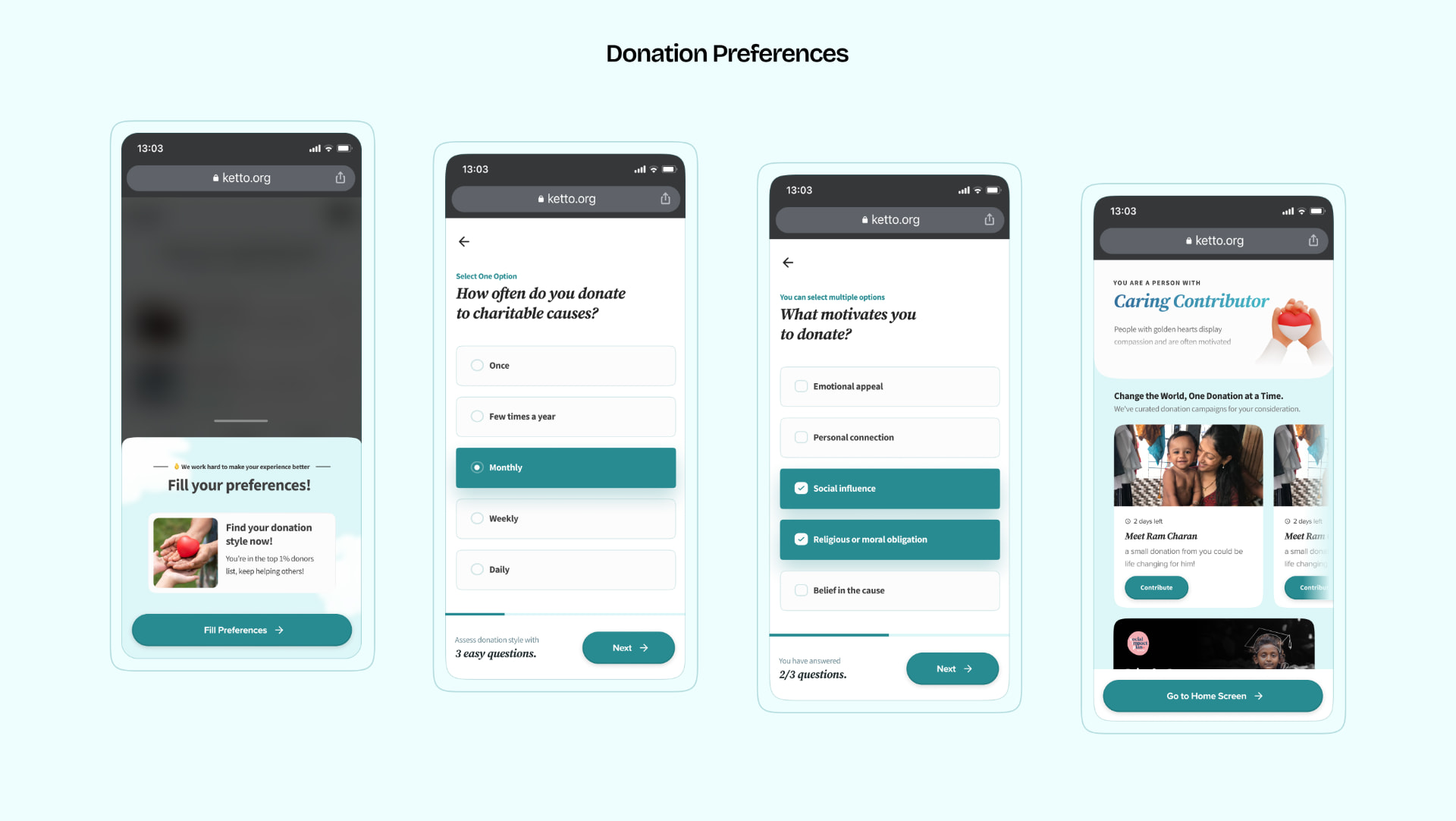
03 Building complete donor profiles - progressive profiling collected personal details, aspirations, preferred causes, frequency, communication preferences, tax details and family information over time instead of asking everything upfront.
04 Understanding donation intent - a short preference flow let users define the causes they care about, why they donate, how often, their goals, preferred reminders and important occasions. This became the foundation for recommendations and segmentation.
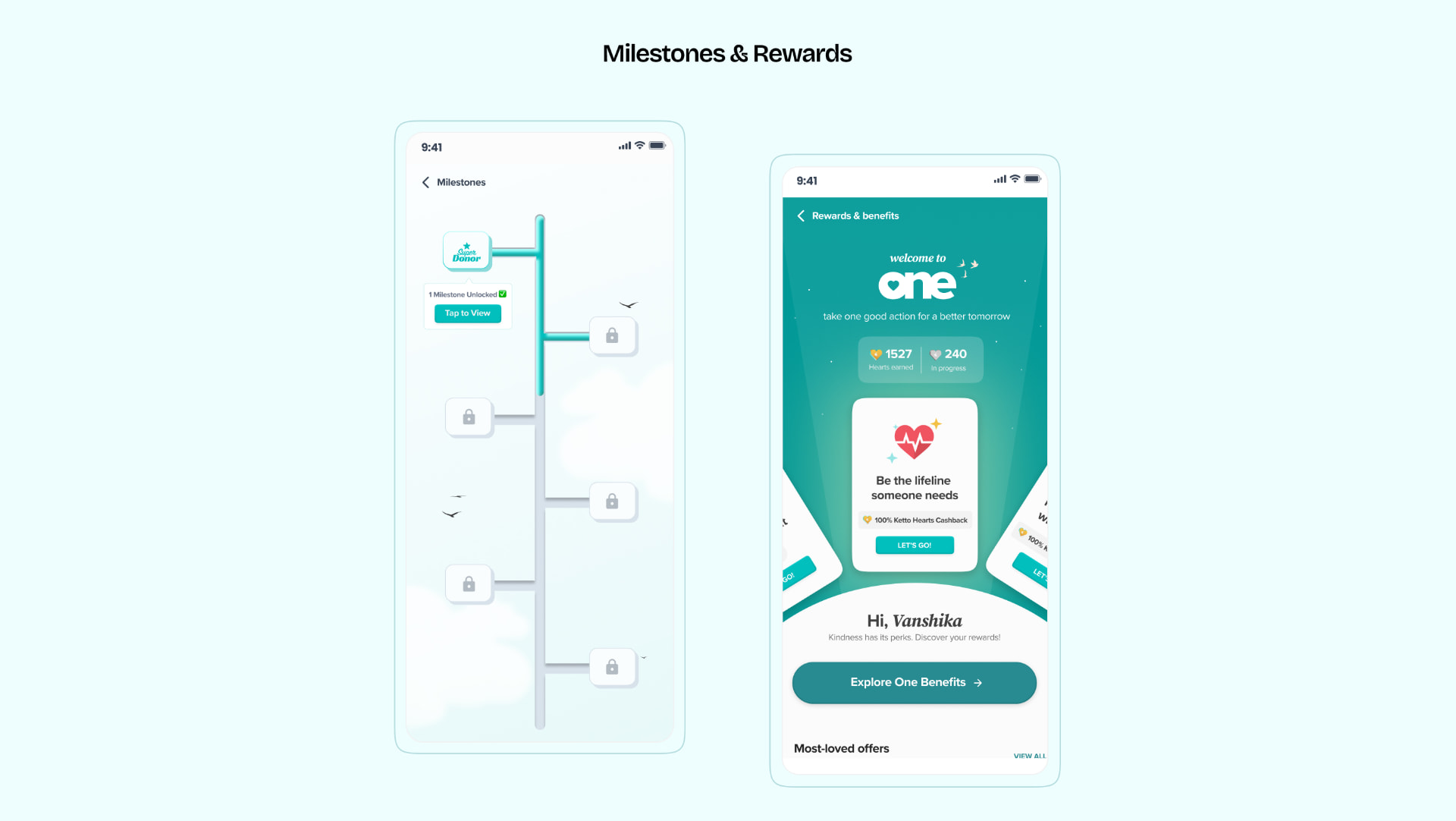
05 Making impact visible - donation stories, progress updates, lives impacted, campaign milestones, certificates and achievement badges closed the biggest emotional gap: donors rarely knew what happened after they gave.
06 Creating habit loops - monthly giving reminders, streaks, rewards, referral benefits, donation anniversaries and tax reminders replaced random asks with relevant context.
07 Building a donor control center - one profile section for donation history, monthly SIPs, preferences, communication and notification settings, referrals, FAQs and tax information, reducing dependence on support.
Result
From a single transaction to a donor relationship.
The redesigned post-donation experience shifted Ketto from a one-time donation platform towards a relationship-driven donor ecosystem. The platform could now understand intent, personalize communication and build engagement through meaningful touchpoints.
Repeat donations rose 8.1% in month one, 7.3% in month two and 3.9% in month three, with a sustained 3.5% lift in recurring donations from users who continued giving beyond three months.
- Personalized donor journeys
- Rich donor segmentation via profiles and preferences
- Better campaign targeting
- Reduced reliance on generic tele-calling
- More opportunities for recurring donations
- Stronger emotional engagement after donation
“The biggest opportunity wasn't the donation flow. It was everything after it.
Design for the relationship, not the conversion.
This project fundamentally changed how I think about product design. When users feel acknowledged, informed and connected to the impact of their contributions, they're far more likely to return.
Designing for long-term relationships creates significantly more value than optimizing a single conversion.