SALARY SE
Scaling Fintech Design with AI
7 min read
The brief
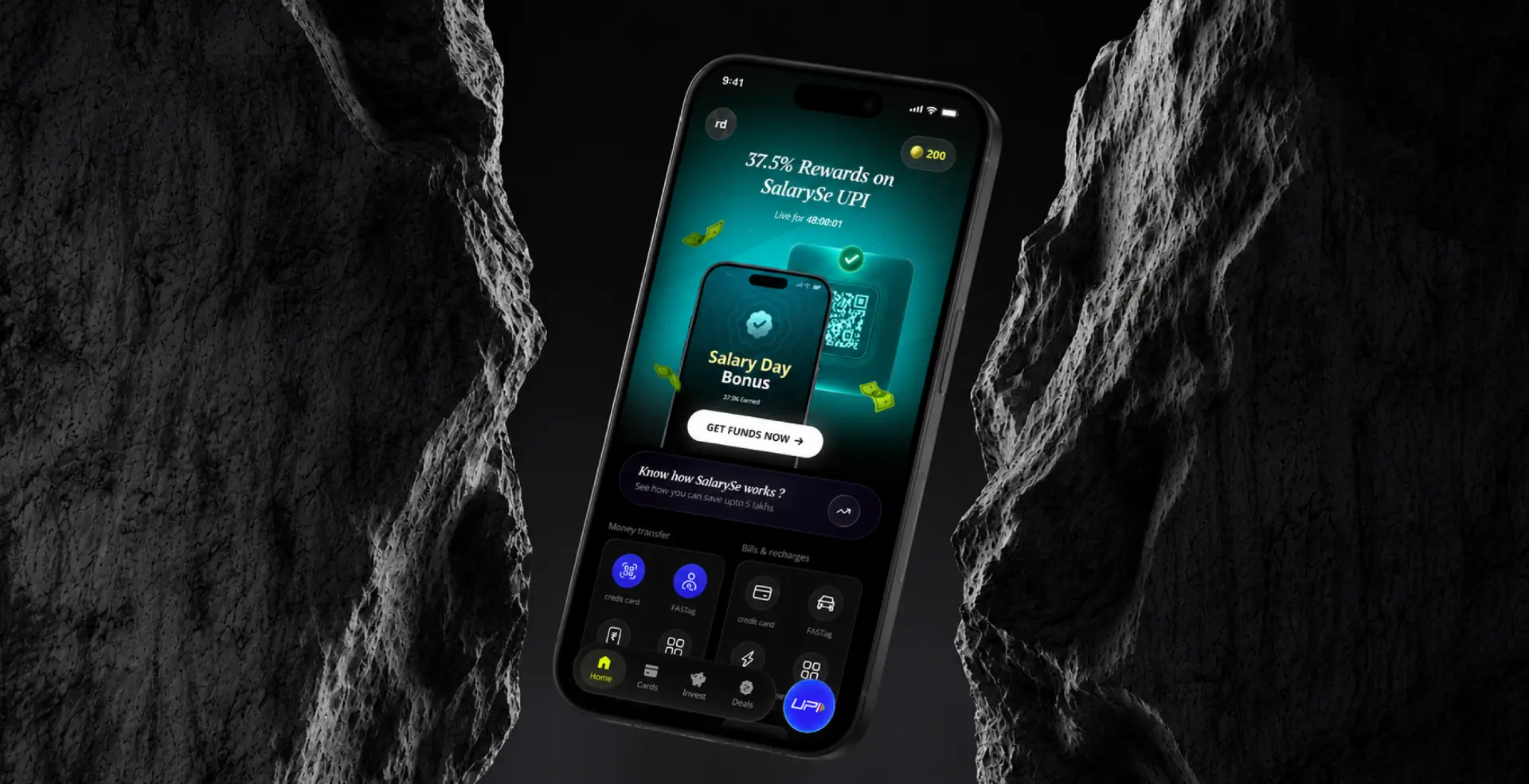
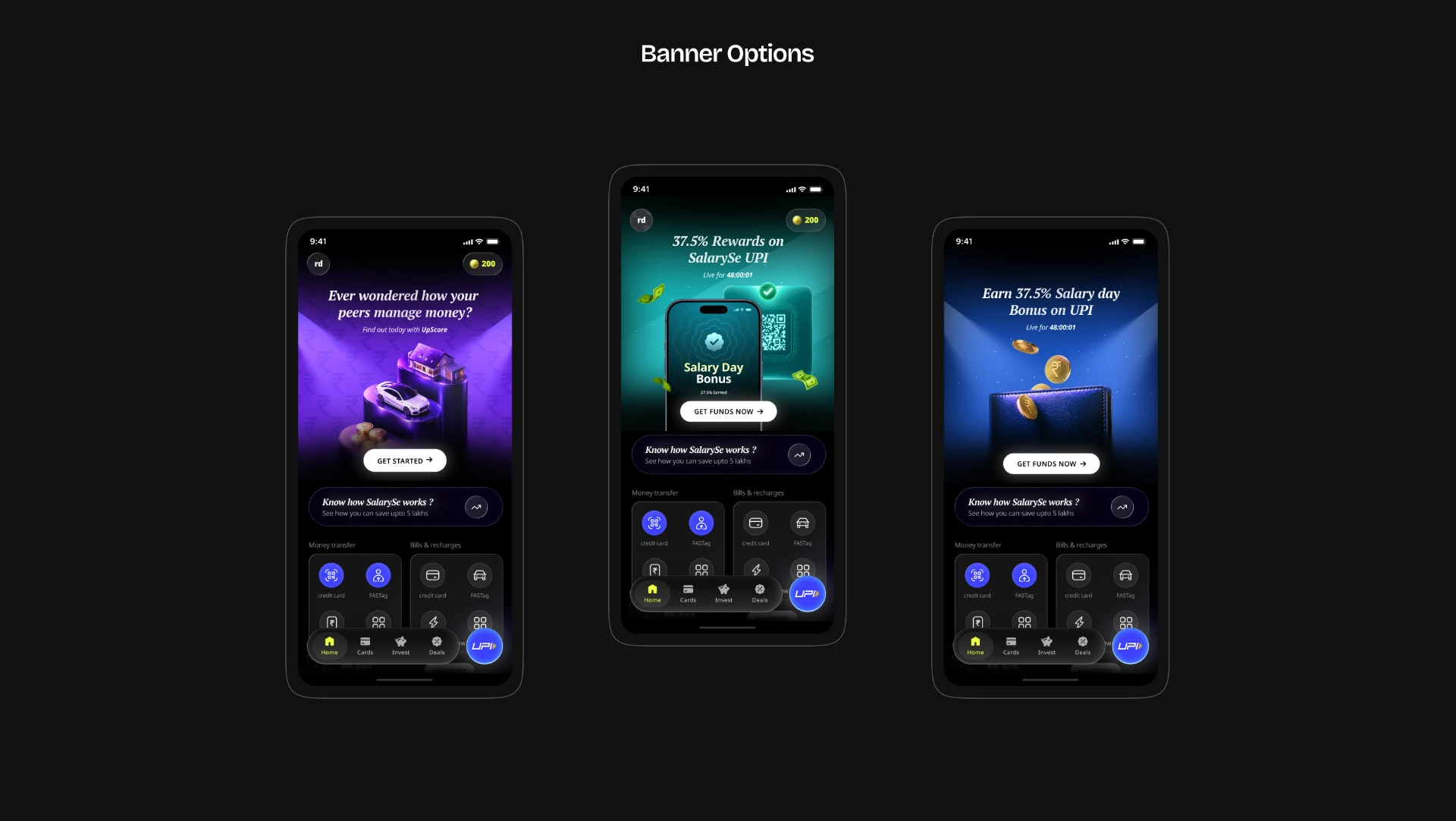
Marketing banners were one of the slowest parts of the product design workflow. Every campaign required multiple rounds of visual exploration, manual asset creation and repeated iterations before reaching engineering. Instead of simply redesigning the homepage, I redesigned the way visual assets were created.
320 → 25
Minutes per banner
2
Distinct user journeys
5
AI workflow steps
Situation
The SalarySe homepage is the highest-traffic surface inside the app - but it was underperforming on every front.
The SalarySe homepage serves two very different audiences. First-time users arrive looking for product discovery and trust. Returning users return for quick actions, personalized offers and financial shortcuts.
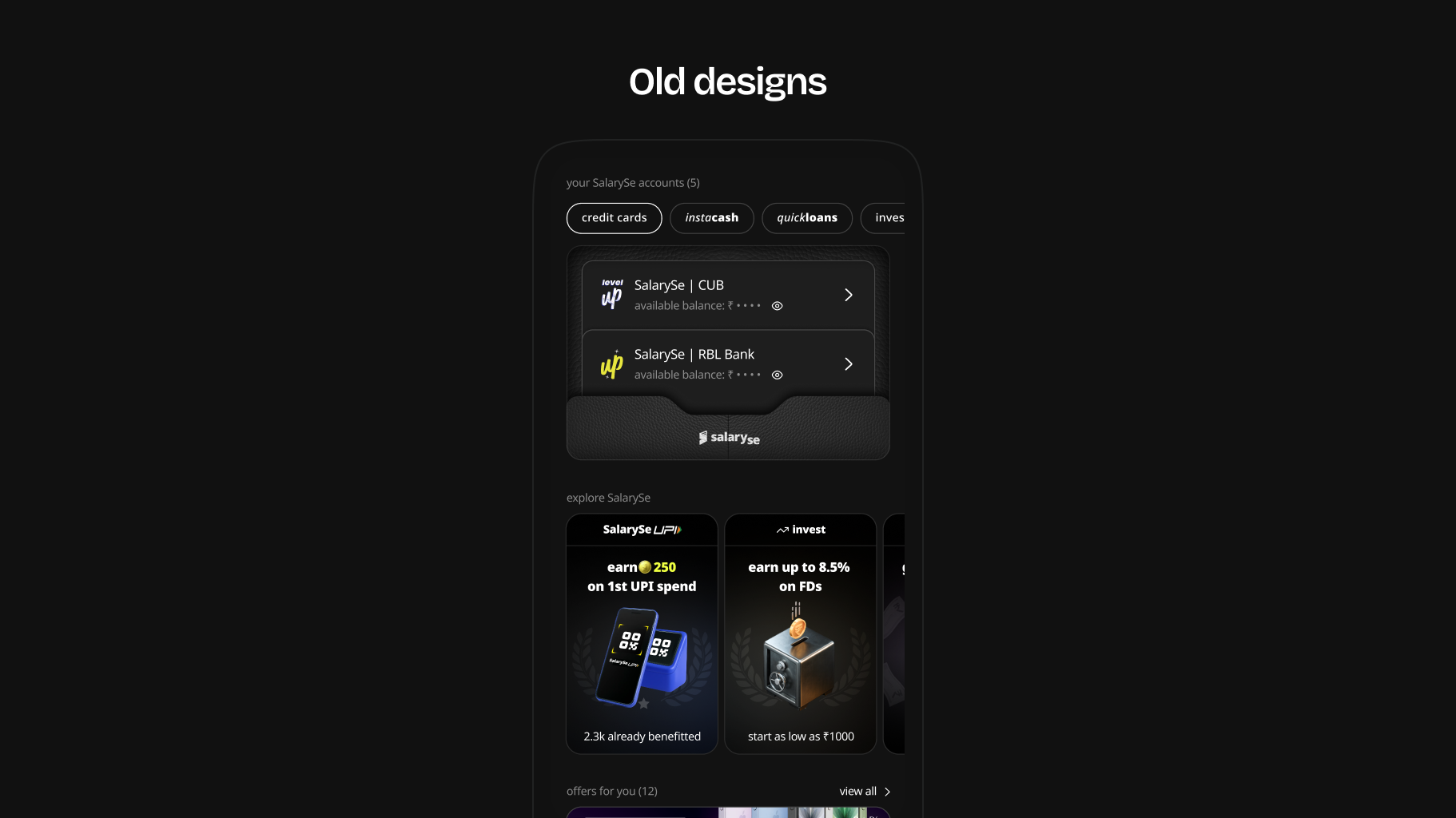
The existing page failed both. The information hierarchy was inconsistent, promotional banners lacked visual consistency, and every new campaign required designers to manually recreate assets from scratch. As marketing velocity increased, banner production became one of the biggest bottlenecks for the design team.
Task
Redesign the homepage while building a scalable, AI-assisted visual workflow.
The objective was not just a cleaner page. It was a faster system. The redesign needed to improve homepage hierarchy, personalize experiences for first-time and returning users, standardize promotional banner creation, reduce production time without sacrificing quality, and create reusable AI-assisted workflows for future campaigns.
- Improve homepage hierarchy
- Personalize for first-time and returning users
- Standardize promotional banner creation
- Reduce production time without sacrificing quality
- Create reusable AI-assisted workflows
Action
A homepage rebuilt around two journeys - powered by a repeatable AI-assisted production system.
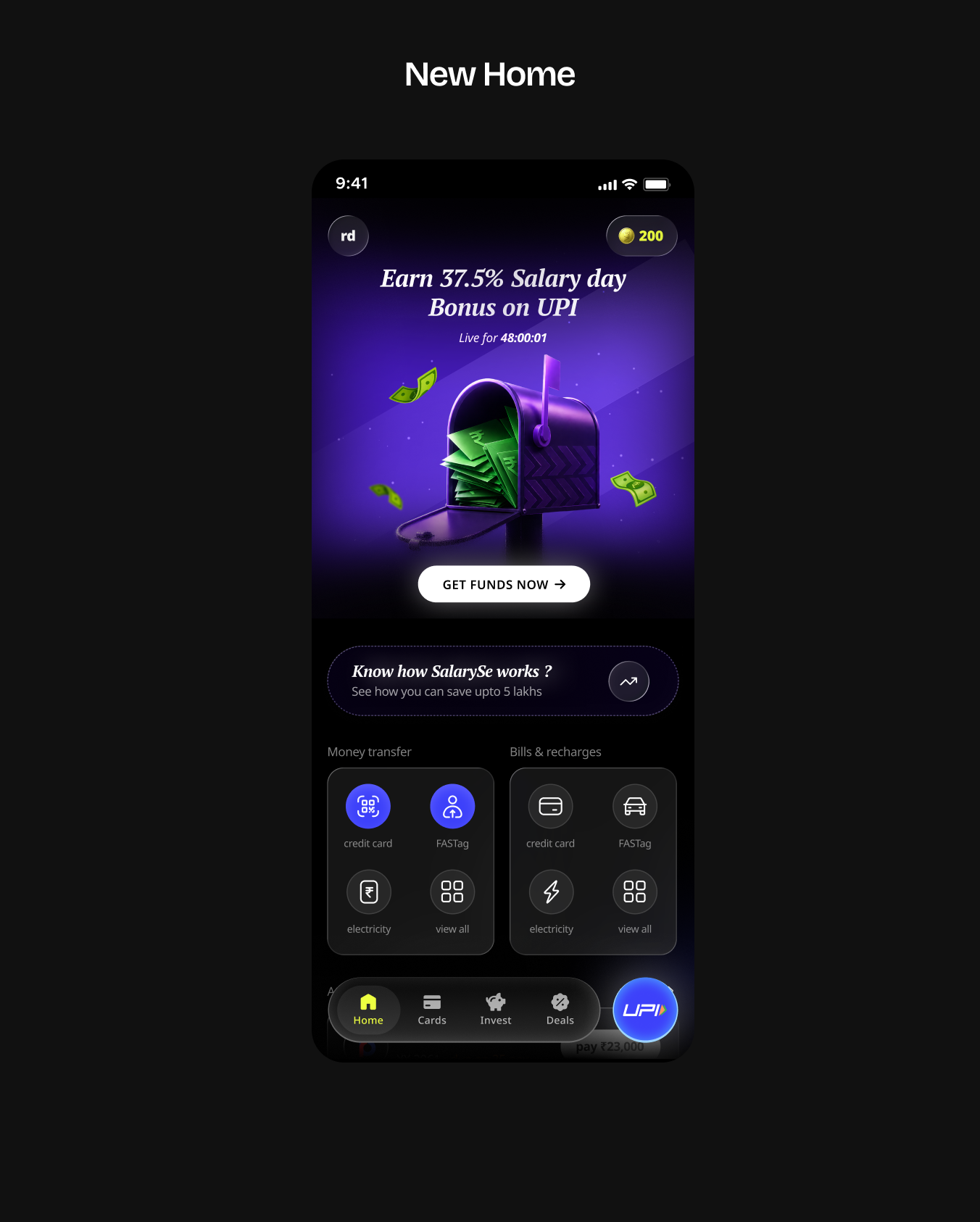
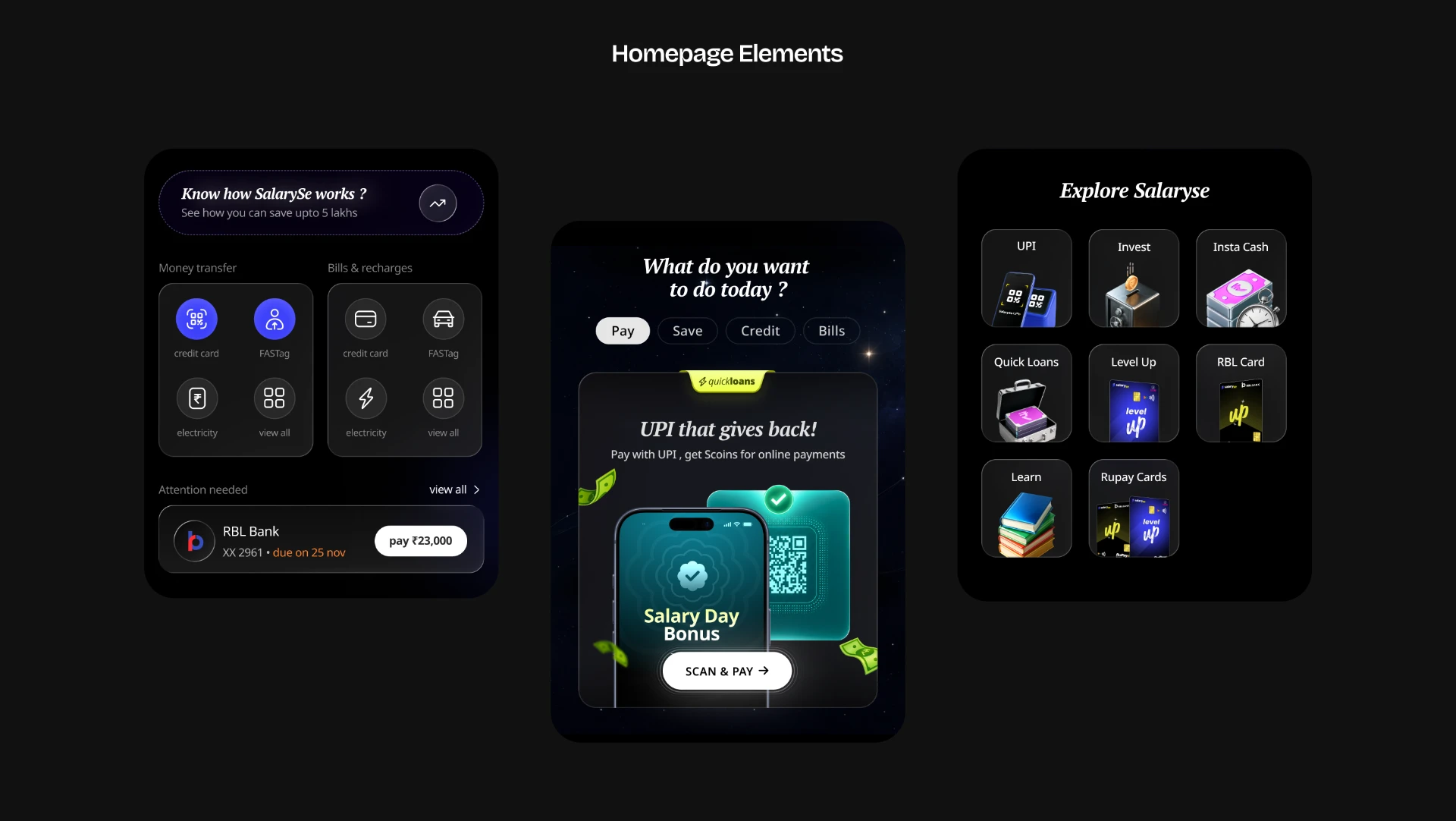
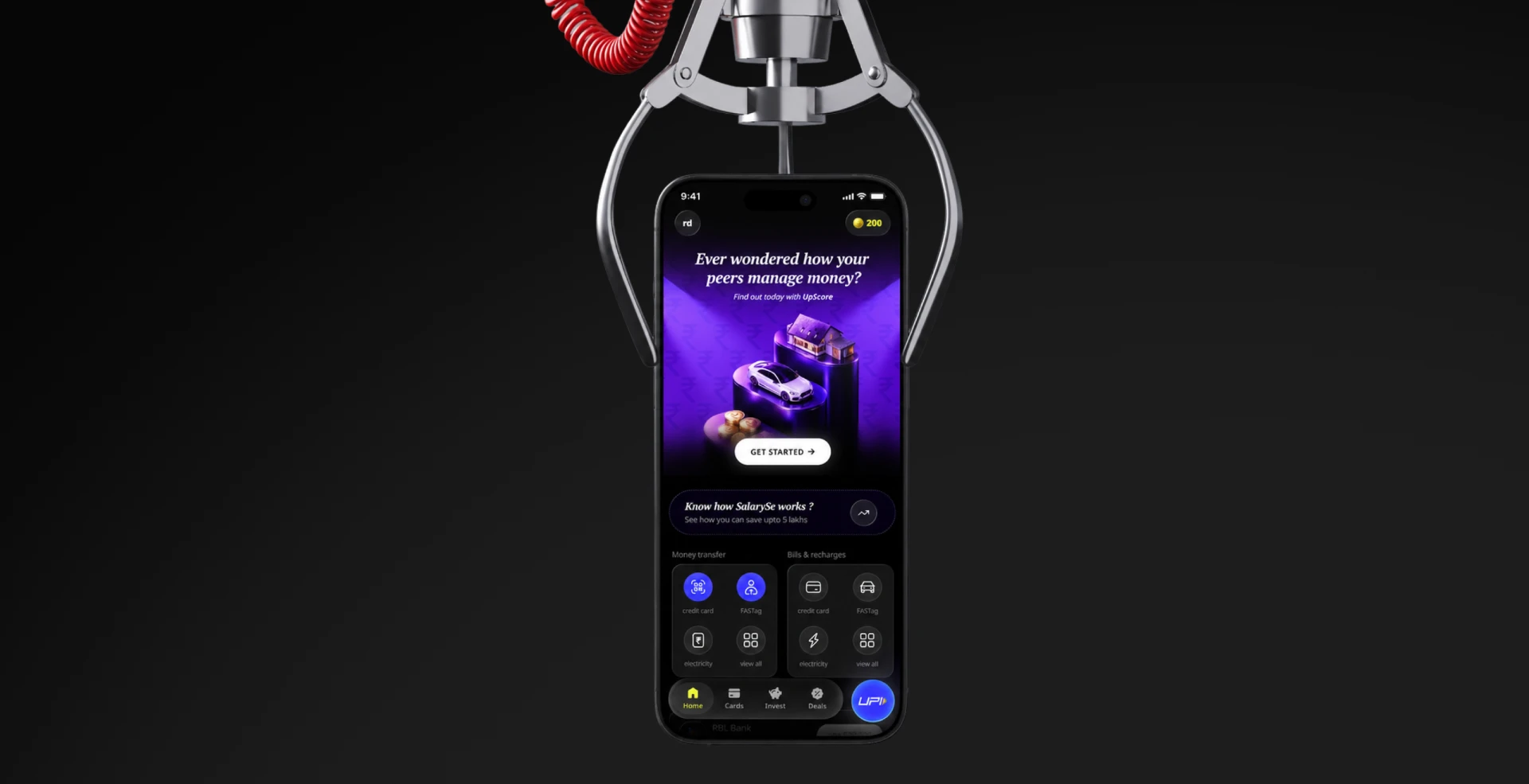
The experience was restructured around two distinct user journeys. First-time users were guided through product discovery, trust building, feature education and onboarding. Returning users were prioritized with personalized rewards, pending actions, financial shortcuts and high-frequency tasks.
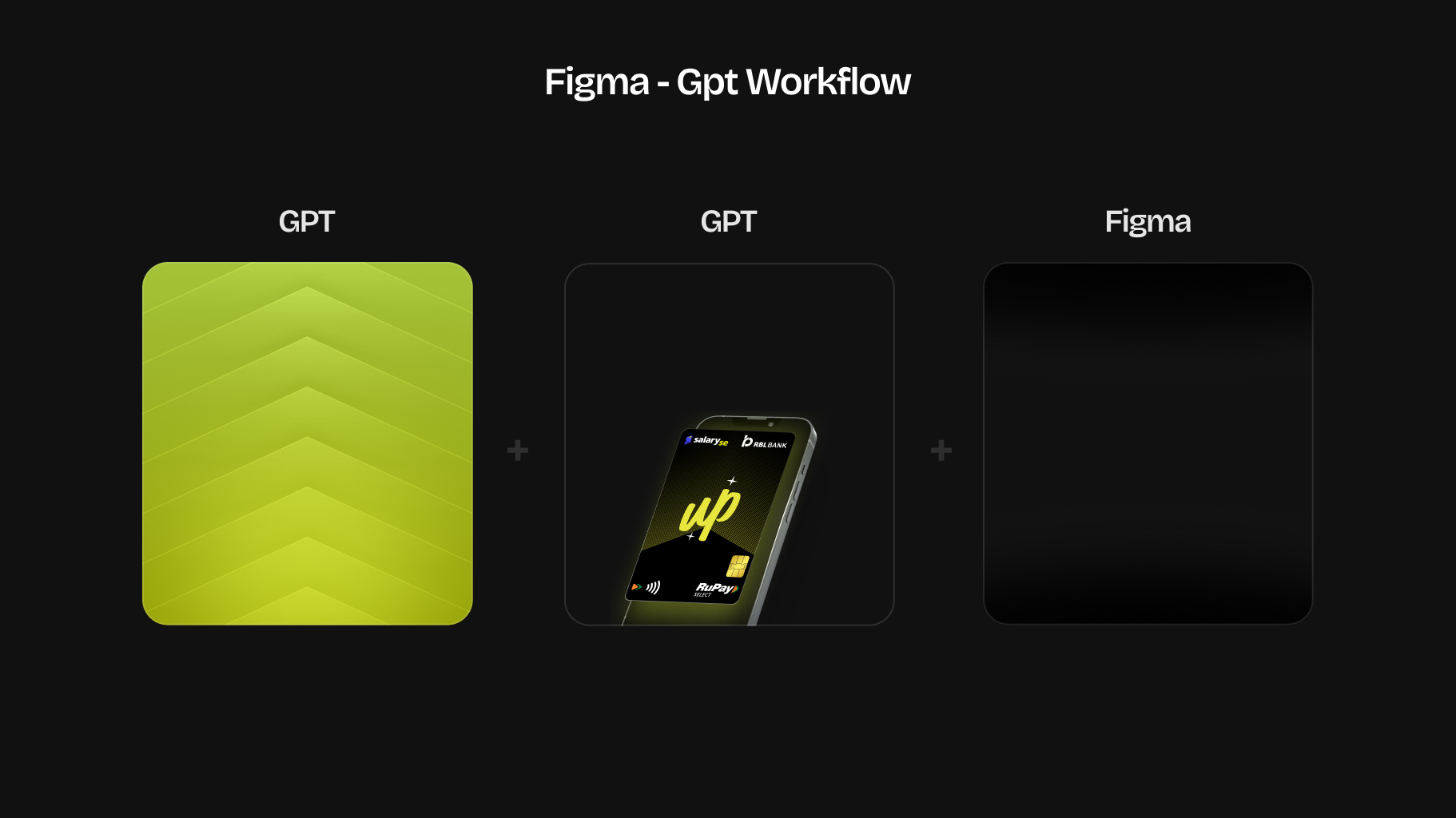
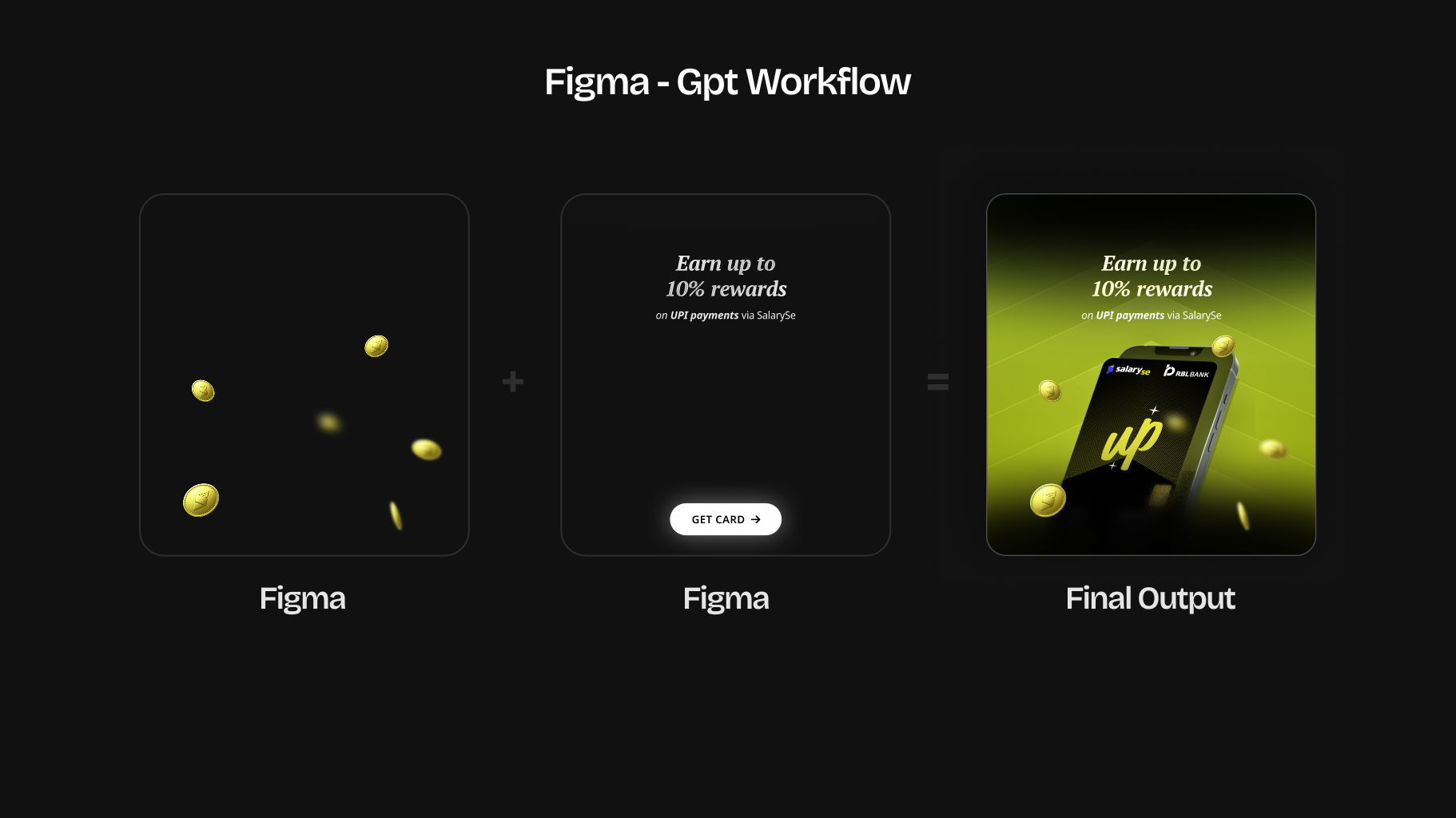
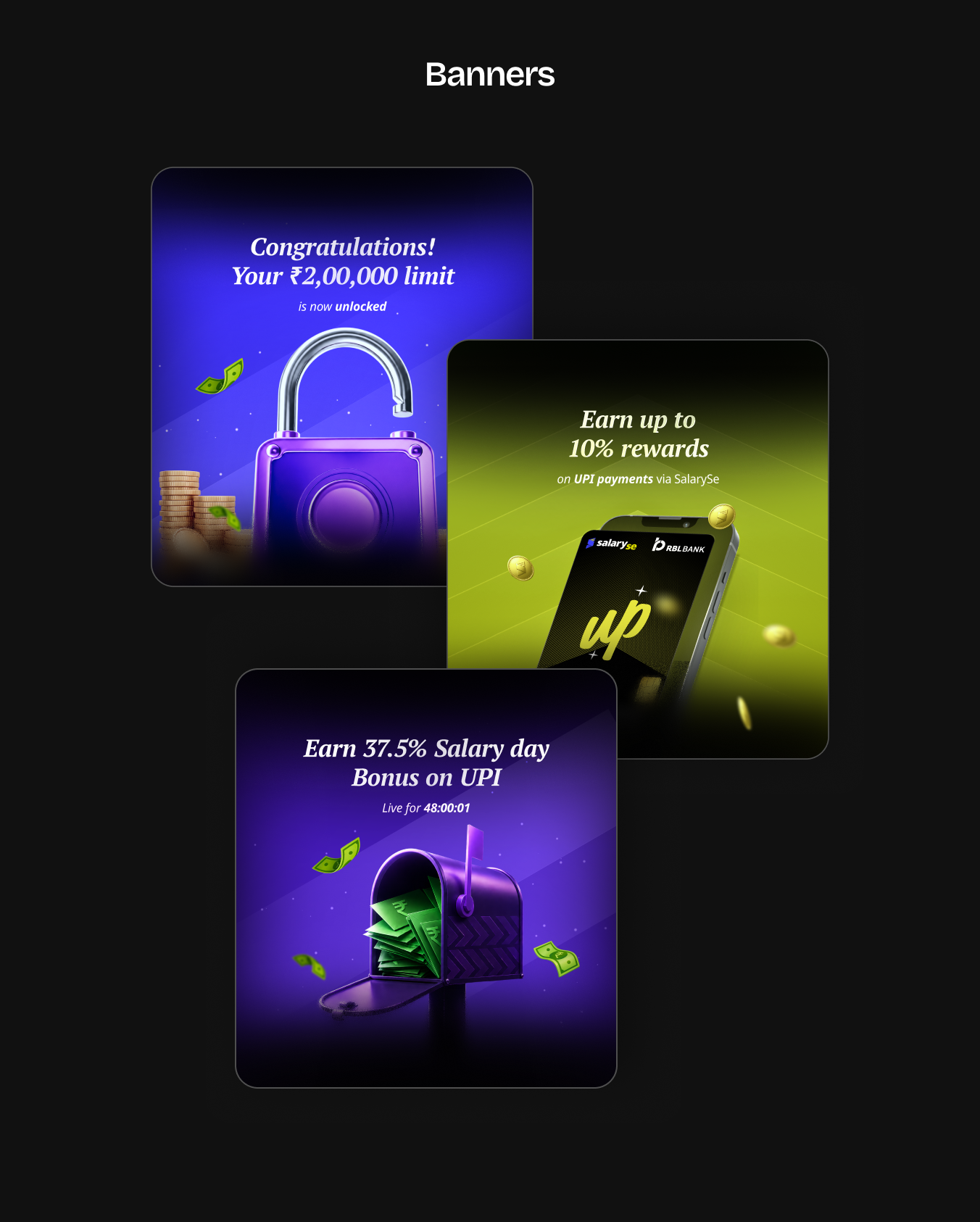
Rather than manually designing every campaign, I created an AI-assisted visual production pipeline using Claude and ChatGPT. The workflow generated premium 3D hero visuals, created reusable cinematic backgrounds, combined assets in Figma with blur, lighting and depth techniques, layered supporting illustrations and micro-elements, and finished with typography, CTAs and product messaging through reusable component templates.
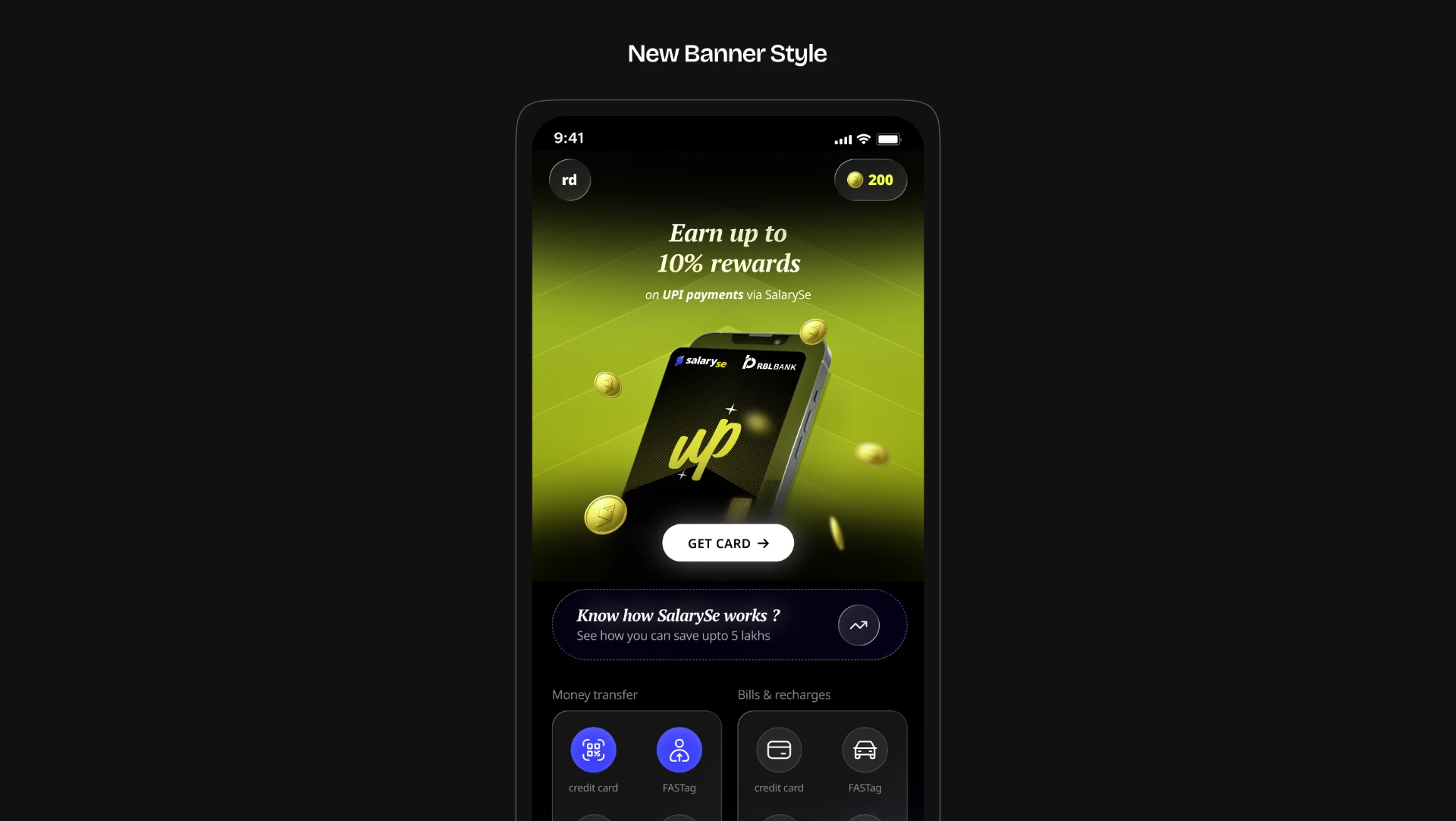
The final system was component-first. Templates allowed the team to quickly swap headlines, hero visuals, colors, CTAs, product messaging and campaign artwork without rebuilding layouts from scratch.
- Restructured homepage for first-time and returning users
- Built AI-assisted visual pipeline with Claude + ChatGPT
- Created reusable 3D hero and background system
- Developed component-based banner templates
- Reduced production time while preserving quality
Result
The redesign improved both the product experience and the team's design velocity.
Homepage restructured around first-time and repeat user journeys. Promotional banners were standardized across the product. The AI-assisted visual production pipeline reduced banner production time from 320 minutes to 25 minutes. Scalable design components could be reused across multiple campaigns, and the gap between idea and production-ready UI shrank dramatically.
- Homepage restructured around first-time and repeat user journeys
- Standardized promotional banners across the product
- Built reusable AI-assisted visual production pipeline using Claude + ChatGPT
- Reduced banner production time from 320 minutes to 25 minutes
- Created scalable design components for future campaigns
- Reduced gap between idea and production-ready UI
“AI didn't replace design. It removed repetitive production work so designers could spend more time solving product problems.
The biggest opportunity wasn't generating visuals faster.
It was building a system where every future campaign became faster, more consistent and easier to scale. By removing repetitive production work, the team could focus on solving product problems rather than rebuilding banners from scratch.