SHIPPIE × TATA 1MG
Building a supply chain visibility platform for 1.5M+ consignments.
7 min read
The brief
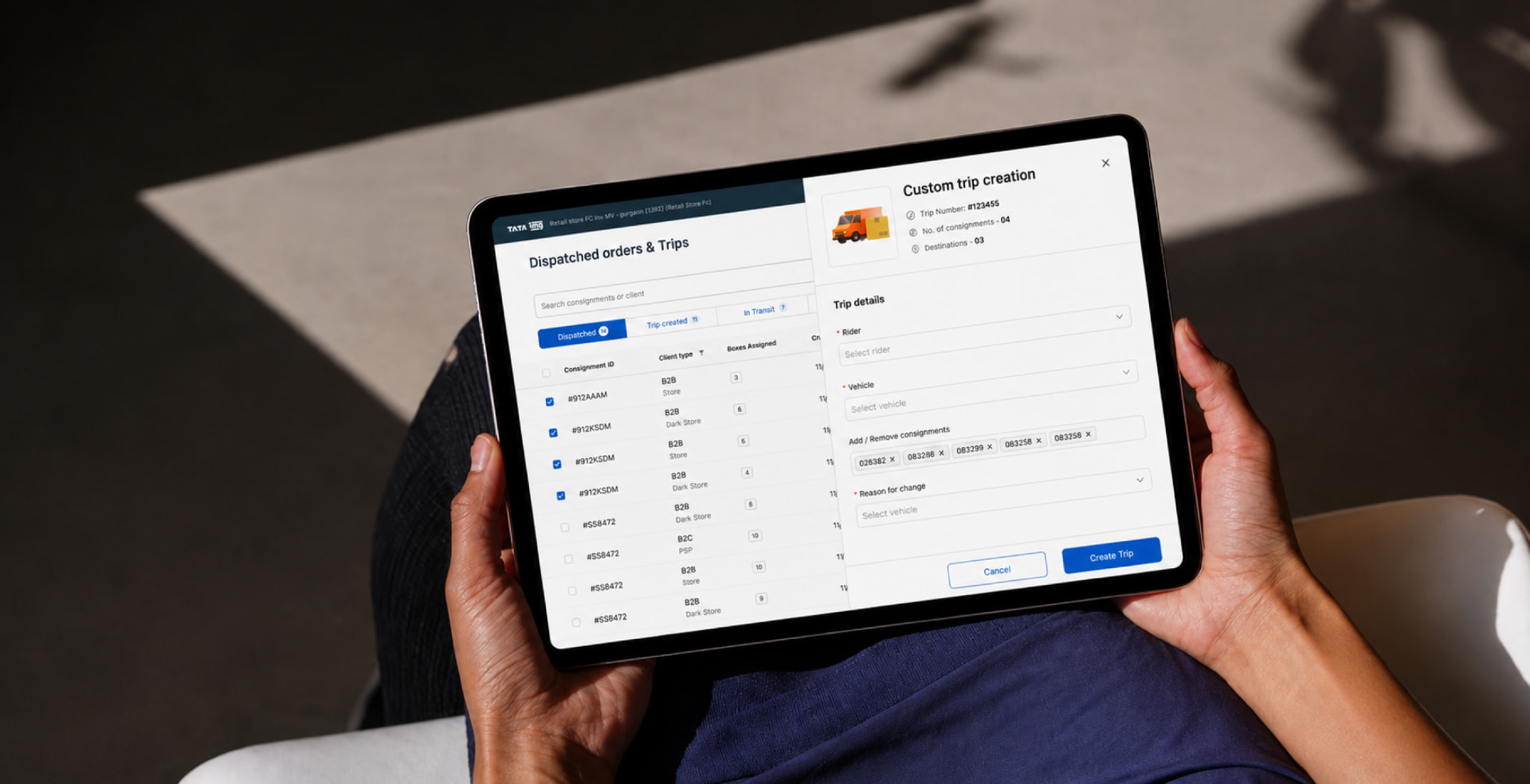
Tata 1mg ships over 1.5 million consignments a year to 500+ retail pharmacies across India, yet warehouse operations still ran on physical registers, Excel sheets and third-party logistics tools. Every team maintained its own process, so there was no single source of truth for tracking a consignment. Shippie replaced that fragmented workflow with one internal operations platform that digitises every checkpoint from inbound inventory to final delivery.
1.5M+
Consignments a year
500+
Retail pharmacies served
11%
Operational efficiency
Situation
A nationwide supply chain running on registers, spreadsheets and third-party tools.
Tata 1mg operates a nationwide supply chain that ships over 1.5 million consignments annually to more than 500 retail pharmacies across India.
Warehouse operations depended on disconnected tools - physical registers, Excel sheets and third-party logistics software such as Shipsy. Since every team maintained its own process, there was no single source of truth for tracking consignments.
The fragmented workflow created operational blind spots, delayed issue resolution and increased dependency on manual coordination. Those warehouse delays eventually reached retailers, leading to stock shortages and slower order fulfilment for end customers.
Task
How might we replace fragmented warehouse workflows with one unified tracking system?
The platform had to standardise operations across warehouses while staying fast enough for the floor. The ultimate goal was a system that improved warehouse efficiency while creating a better experience for downstream retailers and customers.
- Standardise warehouse operations
- Digitise every operational checkpoint
- Improve shipment visibility
- Reduce dependency on registers and spreadsheets
- Help teams identify bottlenecks faster
- Improve delivery timelines to retail stores

Action
From scattered checkpoints to one traceable operational journey.
The operational journey was rebuilt from inbound inventory to final delivery: Understand → Map → Centralise → Simplify → Collaborate. Each stage removed a source of blind spots and made one more checkpoint traceable.
Understanding Warehouse Operations - I spent time on the floor with warehouse associates, observing how consignments actually moved and mapping the complete journey end to end. The insights repeated: information was scattered across multiple tools, teams manually updated registers throughout the day, shipment status was difficult to verify, managers had limited visibility into ongoing operations, delays were discovered too late, and multiple handoffs increased the chance of human error.
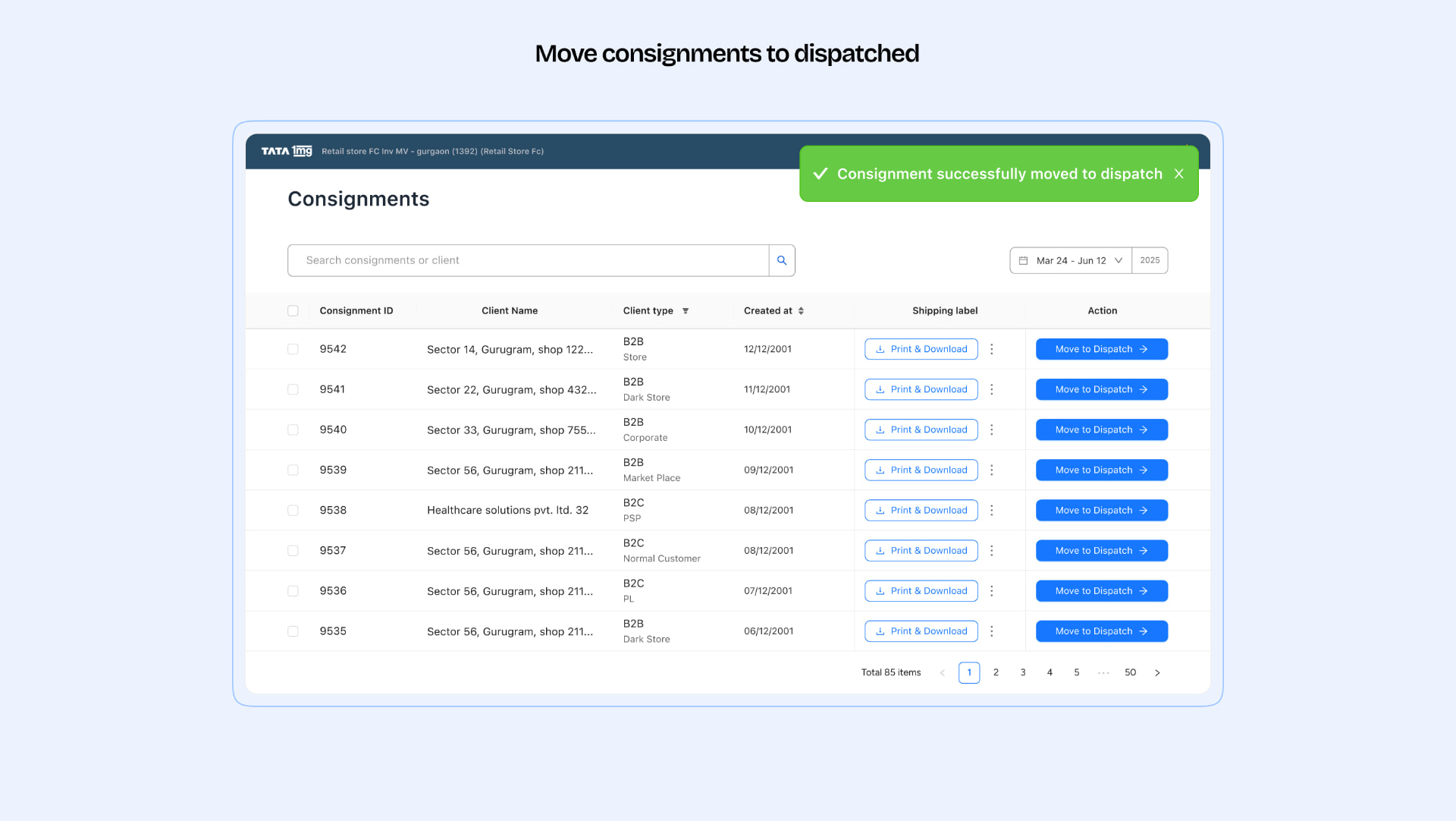
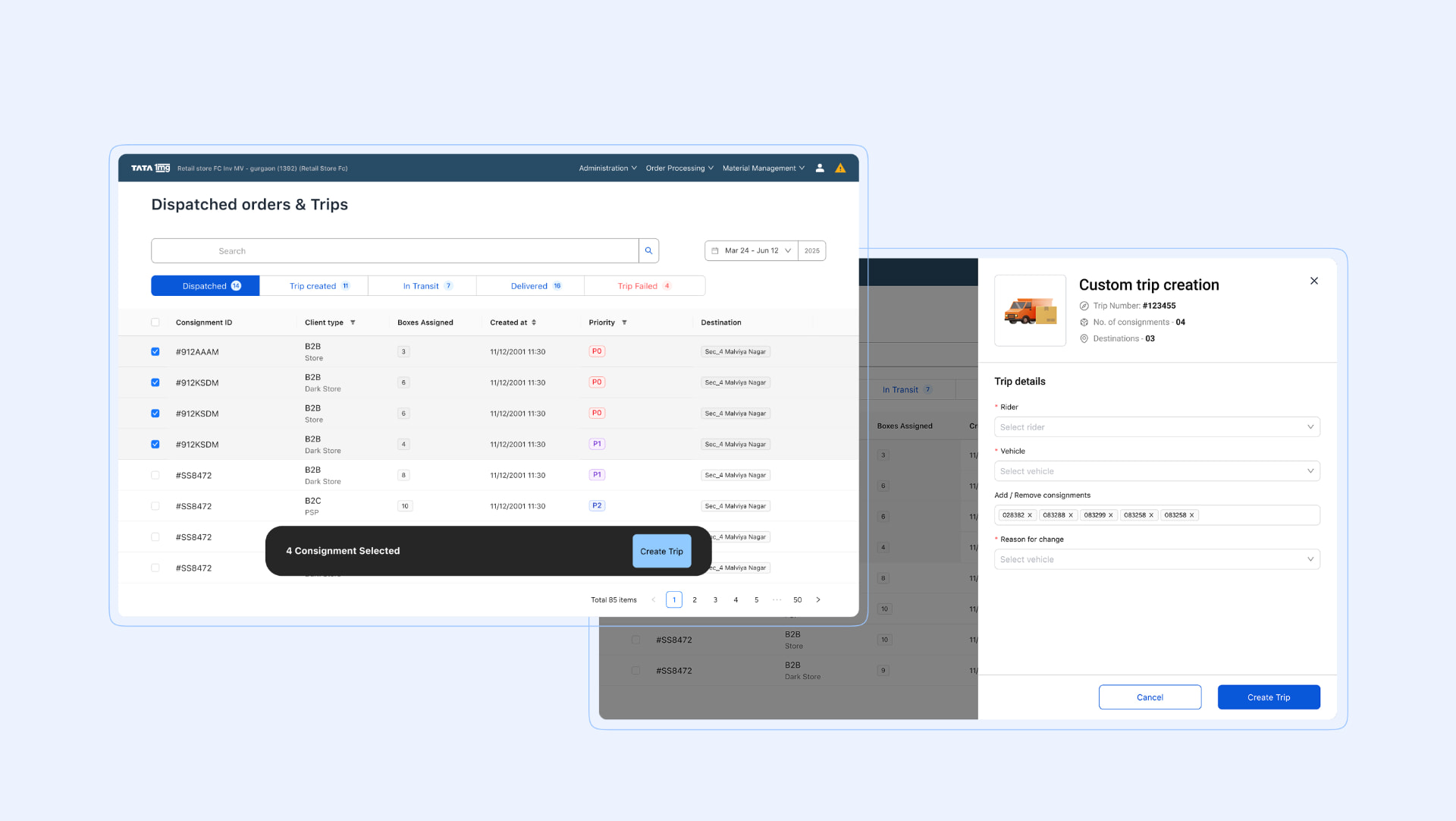
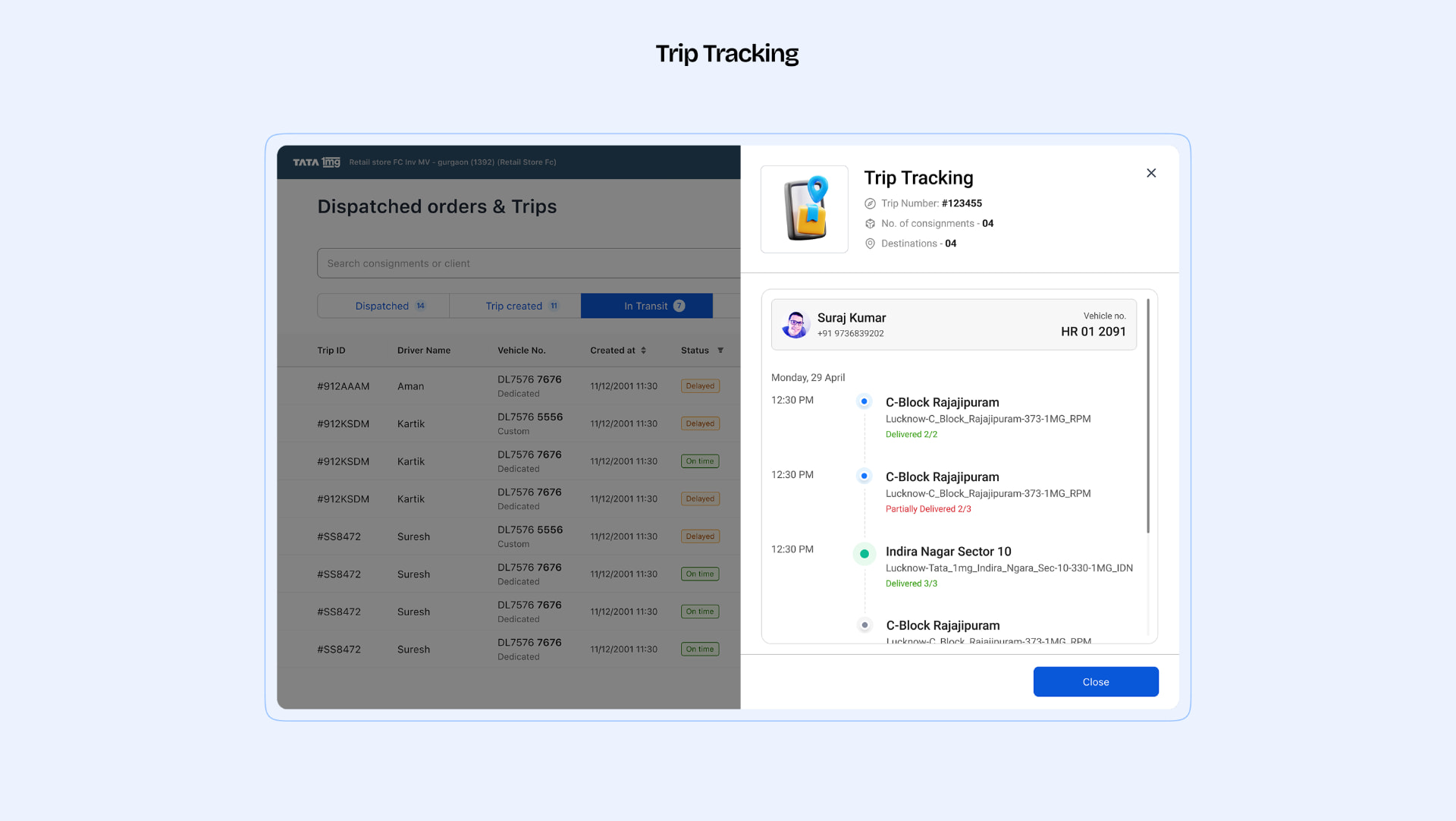
Mapping the End-to-End Workflow - we created a standardised workflow covering every warehouse operation: inventory received, product labelling, sorting, consignment creation, packing, vehicle loading, trip creation, shipment tracking, delivered, on hold and cancelled. Every movement inside the warehouse became digitally traceable.
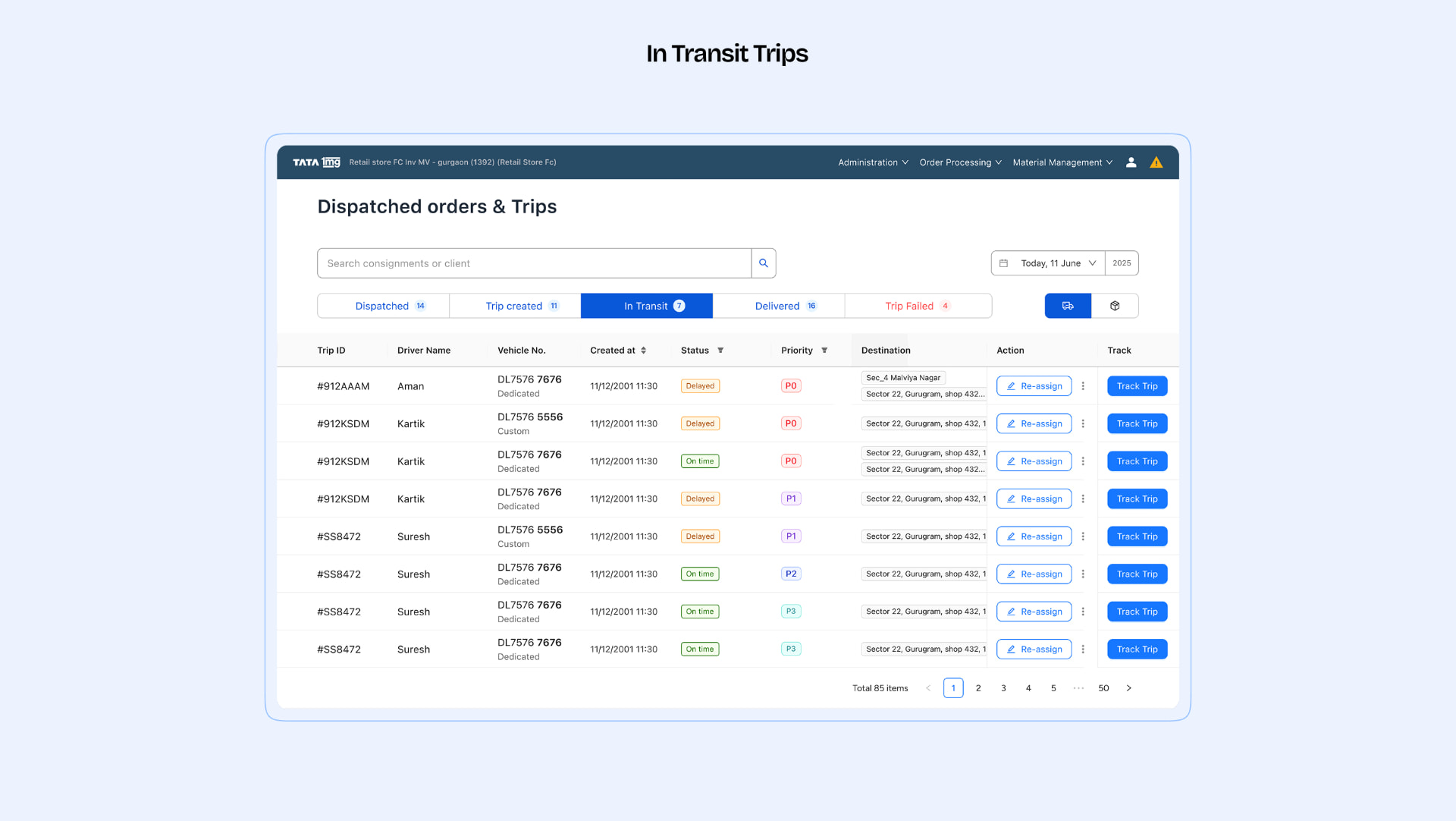
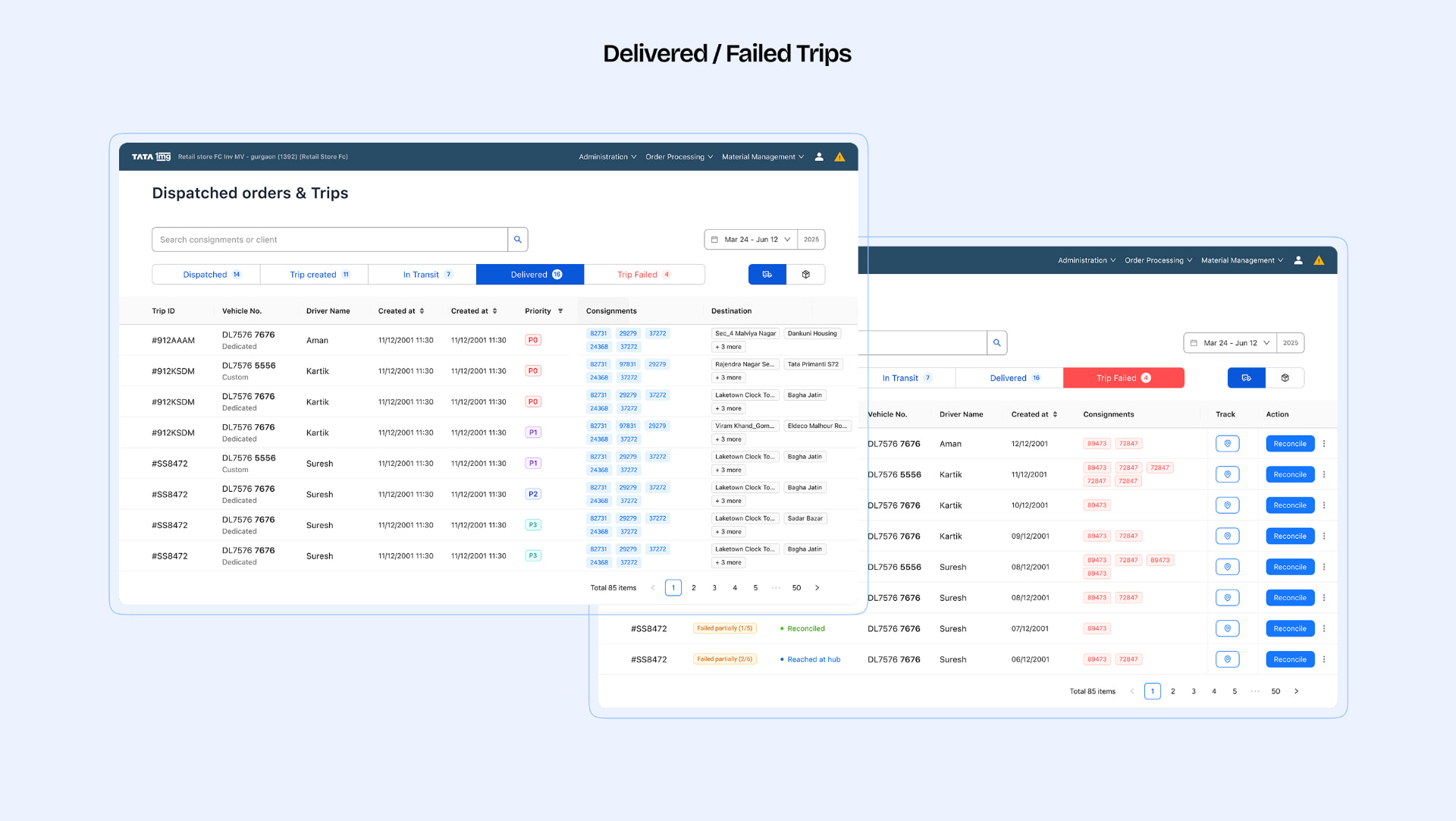
Building a Single Source of Truth - a centralised dashboard let teams monitor every consignment from one place: track shipment progress, identify stalled consignments, view operational status in real time, monitor trip completion and quickly locate bottlenecks. One unified workflow replaced several disconnected systems.
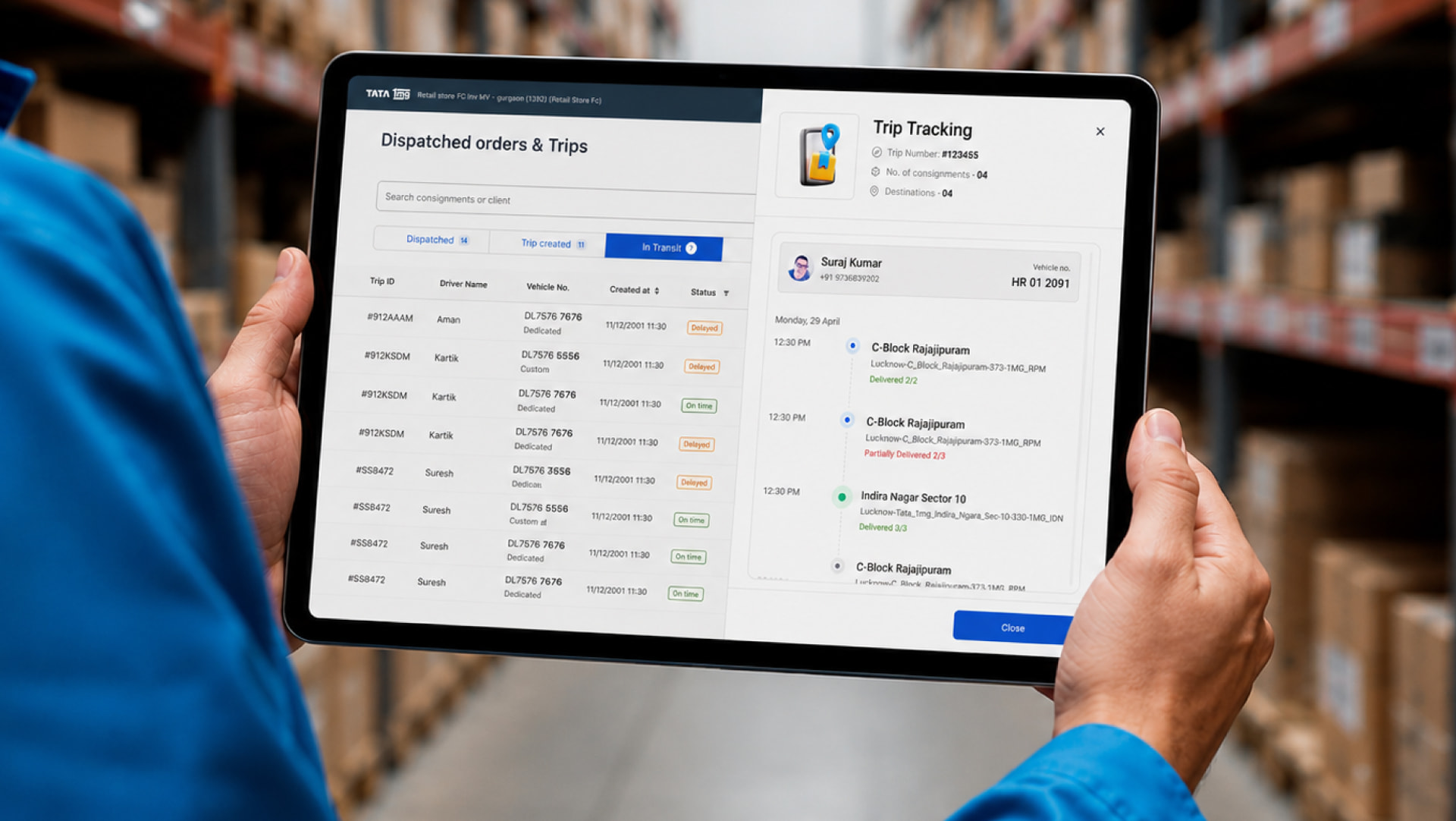
Designing for Warehouse Users - associates work in fast-paced environments where speed matters more than complex interfaces. Every screen prioritised minimal data entry, clear status indicators, large touch targets, faster task completion and reduced cognitive load over visual complexity.
Cross-functional Collaboration - product managers, warehouse associates and operations teams worked alongside design throughout. Warehouse staff validated workflows, so the platform reflected real operational needs rather than idealised process and could be adopted quickly with minimal training.
Result
One standardised operational system across the warehouse lifecycle.
The new platform replaced fragmented warehouse workflows with a standardised operational system. By improving visibility, it helped reduce the operational delays that previously caused inventory shortages at retail stores - ultimately supporting a more reliable experience for end customers.
- Digitised the complete warehouse lifecycle, inventory arrival to final delivery
- Created end-to-end visibility across shipment operations
- Reduced dependency on registers, Excel sheets and third-party tracking tools
- Enabled teams to identify bottlenecks earlier
- Improved coordination between warehouse and logistics teams
- Established a single source of truth for shipment tracking
“Operational inefficiency rarely comes from one broken screen. It comes from disconnected systems.
Understand frontline operations before you design the interface.
Operational inefficiencies rarely originate from a single broken screen - they emerge from disconnected systems and fragmented workflows.
Designing Shippie reinforced the importance of understanding frontline operations first. By involving warehouse associates throughout, we built a platform that fit naturally into existing workflows while bringing consistency, visibility and accountability to a complex supply chain.